Many stroke survivors make meaningful progress in the first several months after their stroke. However, it is common for arm and hand function to stall, leaving patients with ongoing weakness that affects daily life. If your recovery has plateaued, you may wonder whether improvement is still possible. For select patients, advanced neuromodulation therapies such as Vivistim may help re-engage the brain’s ability to strengthen motor pathways and offer effective treatment for chronic arm weakness after stroke.
The Vivistim Paired VNS™ System is an FDA-approved treatment designed to improve upper limb function in stroke survivors who continue to experience weakness months or years after their stroke. By combining targeted rehabilitation therapy with gentle vagus nerve stimulation (VNS), Vivistim helps strengthen the brain’s ability to rewire itself, a process known as neuroplasticity.
At New Jersey Brain and Spine, Vivistim is offered as part of a comprehensive approach to stroke recovery for patients who have plateaued with traditional therapy. Stroke affects nearly 800,000 Americans each year, and many survivors experience long-term upper limb impairment. Vivistim offers new hope for meaningful functional improvement when standard rehabilitation alone has not been enough.
What Is the Vivistim Paired VNS™ System?
Vivistim is a small implantable device that delivers mild electrical stimulation to the vagus nerve in the neck. When paired with occupational or physical therapy exercises, this stimulation helps reinforce neural pathways associated with movement.
Unlike traditional rehabilitation, which relies solely on repetitive practice, Vivistim enhances therapy by increasing the brain’s responsiveness during movement training. Clinical trials have demonstrated that patients receiving paired VNS therapy showed significantly greater improvement in upper limb function compared to rehabilitation alone.
The device is implanted under the skin in the upper chest, with a lead connected to the vagus nerve in the neck. It is activated only during supervised therapy sessions to maximize neuroplastic benefits.
How Is Vivistim Treatment Performed?
Vivistim treatment includes two phases:
1. Device Implantation
The device is implanted during a short outpatient surgical procedure performed under general anesthesia. A small incision is made in the chest to place the generator, and another incision in the neck allows access to the vagus nerve. The procedure typically takes 1–2 hours, and most patients go home the same day.
2. Paired Rehabilitation Therapy
After healing, patients participate in structured upper limb therapy sessions. During therapy exercises, the Vivistim device delivers brief pulses of stimulation timed precisely with movement tasks. Over time, this pairing strengthens motor pathways in the brain.
Many patients experience measurable improvement over several months of therapy. Clinical data published in peer-reviewed studies (available through the NIH) supports its role in enhancing stroke recovery.
Chronic Arm Weakness After Stroke: Why Does Recovery Plateau?
While early rehabilitation is critical after a stroke, it is not uncommon for progress in hand and arm function to slow, or plateau, over time. The brain’s initial period of heightened neuroplasticity gradually stabilizes, and repetitive therapy alone may no longer produce noticeable gains. As a result, chronic arm weakness after stroke can persist months or even years later, leaving patients frustrated and unsure if further improvement is even possible.
Vivistim is recommended for patients who have experienced an ischemic stroke, continue to have moderate to severe upper limb weakness, and have plateaued with traditional therapy after several months. It is not typically recommended for patients with severe medical instability or certain contraindications related to implantable devices.
When Should You Consider an Evaluation?
If you are considering treatment options for yourself or a family member, there are a few simple factors that would give you a good reason to reach out to our team. Here are the criteria we recommend using:
- You are at least six months post-stroke
- You have completed a structured rehabilitation program
- You still have difficulty using your hand or arm
- You want to know if further improvement is possible
Our stroke specialists are experienced neurosurgeons who are able to talk through all aspects of post-stroke care, and give you information about Vivistim therapy that is tailored to you and your recovery stage.
What Patients Are Good Candidates for Vivistim?
As a referring physician, you can look for similar signals in your patients to determine if they would be good candidates for Vivistim. Patients who may be a good fit include those who:
- Have chronic upper extremity impairment after stroke
- Can participate actively in rehabilitation therapy
- Have not regained sufficient hand or arm function
- Seek advanced neurorestorative options beyond standard therapy
The team at New Jersey Brain and Spine includes board-certified neurosurgeons with experience in implantable neuromodulation devices. Patients benefit from coordinated care with rehabilitation specialists and access to advanced surgical facilities.
Risks and Benefits of Vivistim Treatment
In terms of an overall risk calculus, it’s helpful to know the history of VNS devices. While Vivistim represents an innovative approach to stroke recovery, implantable VNS devices have been used in clinical practice for several decades. The first implantable VNS was placed in a patient with drug-resistant epilepsy in 1988, and based on subsequent clinical evidence, the U.S. Food and Drug Administration (FDA) granted approval for the therapy in 1997 to help reduce seizures in patients whose epilepsy could not be controlled with medications alone. Since that time, millions of people worldwide have received VNS implants for conditions such as epilepsy and, later, treatment-resistant depression, making VNS one of the most established surgical neuromodulation procedures in modern medicine.
Of course, as with any procedure, risks and benefits must be considered.
Potential Benefits:
- Improved upper limb strength and coordination
- Enhanced neuroplasticity during rehabilitation
- FDA-approved therapy with clinical trial support
- Minimally invasive outpatient implantation
- Potential improvement even years after stroke
Potential Risks:
- Surgical risks such as infection or bleeding
- Hoarseness or throat discomfort (typically temporary)
- Device-related complications
- Need for additional therapy commitment
Your NJBS specialist will review your medical history and imaging to determine whether Vivistim is appropriate for you. It’s important to note that Vivistim is not a replacement for early stroke rehabilitation. It is considered only after conventional therapy has been completed.
Schedule a Consult With Our Vivistim Specialists
Our highly trained neurosurgeons offer advanced neuromodulation therapies alongside comprehensive stroke care. We prioritize personalized treatment plans and coordinate closely with rehabilitation specialists to maximize recovery potential.
If you or a loved one is living with chronic arm weakness after a stroke, contact us to learn whether Vivistim may be right for you.
Frequently Asked Questions About Vivistim
What is Vivistim used for?
Is Vivistim FDA-approved for chronic stroke arm weakness?
How long does recovery take?
Is the implant permanent?
Who is not a candidate for Vivistim?
How do I know if Vivistim is right for me?
Have More Questions about This Condition
New Jersey Brain and Spine Earns #3 National Ranking For Neurosurgical Practices
New Jersey Brain and Spine has once again been recognized among the nation’s elite neurosurgical practices—this time...
Patient Story: Patient Gets Fitness Career Back in Shape Thanks to Dr. Roth
Robin Bray is the owner of FitnessBarre™, a popular local workout studio in Midland Park, New Jersey. The...
NJBS Highlighted for Advanced Tremor Treatment With Hackensack Meridian Health
New Jersey Brain & Spine was recently featured alongside Hackensack Meridian Health, highlighting the impact of...

Patient Story: Ashley’s Recovery After Cervical Disc Herniation
A stroke at birth left Ashley with cerebral palsy and limited mobility on her right side. So when she woke up at 1...

Back on the Competition Track: A Young Athlete’s Recovery After L4–L5 Disc Herniation Surgery
Severe nerve compression brought life to a halt—lumbar microdiscectomy helped him reclaim strength, mobility, and...
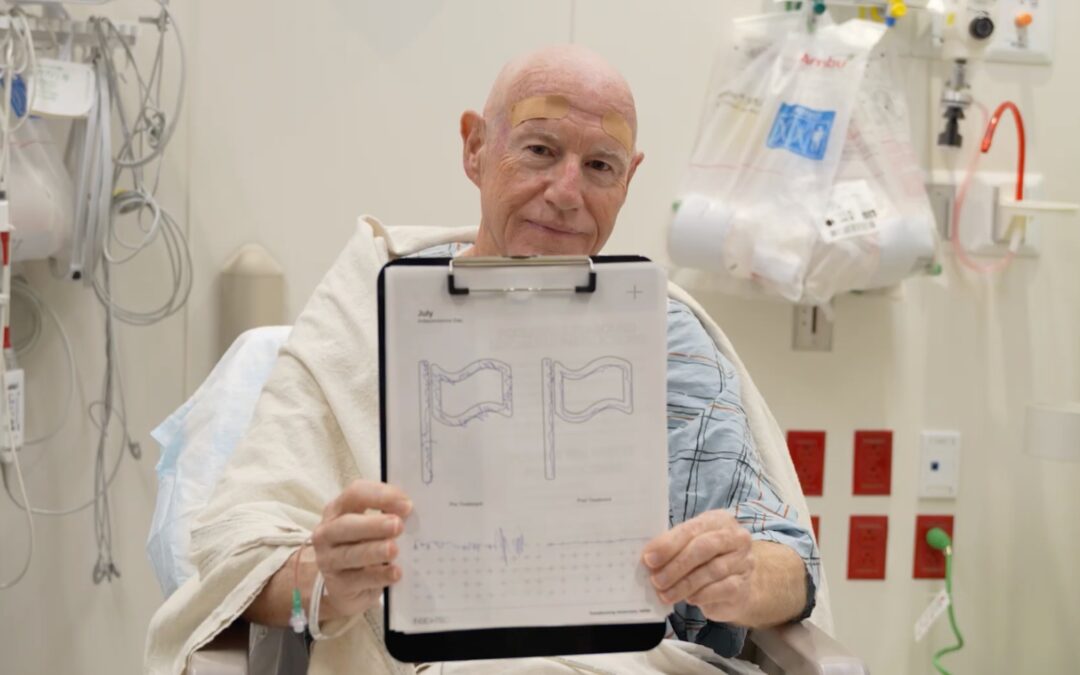
Ground-Breaking HiFu Treatment Re-Opens a Door
Innovative non-invasive essential tremor treatment puts car enthusiast back in the driver’s seat Dan lived with...
Full Patient Story: Chris’s Recovery After L4–5 Posterior Lumbar Interbody Fusion (PLIF)
How an L4–5 Posterior Lumbar Fusion Gave Chris Feeling in His Leg Again and His Life Back Chris was only in his early...
Back in the Game: Brian’s Recovery After C5–6 Disc Replacement
Neck pain and cervical radiculopathy stole his mobility, his golf swing, and his comfort, an artificial disc...

New Jersey Brain and Spine Launches $2000 Healthcare Scholarship to Support Next Generation of Healthcare Professionals
Investing in the future of healthcare: Annual scholarship open to high school and undergraduate students from or...