Cervical disc replacement is an advanced surgical procedure designed to relieve nerve or spinal cord compression in the neck while preserving natural spinal motion. Instead of fusing the vertebrae together, as in traditional anterior cervical fusion (ACDF), this procedure replaces a damaged disc with an artificial disc implant that maintains movement at that level of the spine.
At New Jersey Brain and Spine, cervical disc replacement may be recommended for patients with persistent neck pain, arm pain, numbness, or weakness caused by conditions such as herniated discs or cervical spinal stenosis. For appropriately selected patients, artificial disc replacement offers effective decompression while reducing stress on adjacent spinal levels.
What Is Cervical Disc Replacement?
Cervical disc replacement, which is also known as artificial disc replacement, is a procedure in which a damaged cervical disc is removed and replaced with a medical-grade artificial implant designed to mimic the natural motion of the spine.
Neck discomfort and cervical radiculopathy (nerve-related arm pain) are widespread conditions that affect a significant portion of the population. In fact, research shows that up to 40% of work absenteeism can be traced to people who have a history of neck pain. Cervical disc replacement has become an increasingly common alternative to fusion for patients with single-level disc disease who do not have significant spinal instability. Clinical studies have demonstrated comparable or improved outcomes in carefully selected patients, particularly in preserving range of motion.
Unlike fusion surgery, which permanently connects two vertebrae, disc replacement maintains mobility at the treated level, potentially reducing long-term stress on adjacent discs.
How Is Cervical Disc Replacement Performed?
Cervical disc replacement is performed under general anesthesia using an anterior (front-of-the-neck) approach, similar to ACDF surgery.
During the procedure, the surgeon:
- Makes a small incision in the front of the neck;
- Removes the damaged disc;
- Relieves pressure on the spinal cord and/or nerve roots; and then
- Places an artificial disc implant into the disc space.
The procedure typically takes one to two hours. Most patients are discharged the same day, or some may stay overnight. Because motion is preserved, many patients experience a relatively smooth recovery, returning to light activities within two to four weeks. As always, recovery timelines can depend on individual factors.
When Is Cervical Disc Replacement Recommended?
Cervical disc replacement is typically recommended when:
- A single cervical disc is causing nerve compression
- Symptoms include arm pain, numbness, or weakness
- Conservative treatment has failed
- There is no significant spinal instability or advanced arthritis
- There is no significant cervical deformity
For some patients, cervical disc replacement may be preferred over anterior cervical fusion (ACDF) because it preserves motion and may reduce adjacent segment degeneration over time.
What Patients Are Good Candidates for Cervical Disc Replacement?
Patients who may be good candidates include those who:
- Have a single-level cervical disc herniation
- Experience arm pain caused by nerve compression
- Have not improved with non-surgical treatment
- Do not have significant cervical instability
- Are focused on maintaining neck mobility
- Have maintained neck alignment
- Do not have significant bone spurs
- Neck pain is not their main complaint rather than arm pain
Our team at New Jersey Brain and Spine includes board-certified neurosurgeons with expertise in both fusion and motion-preserving spine procedures. Because we are a practice focused on subspecialization, our patients benefit from spine experts who always start with the most conservative treatment option and answer any and all patient questions along the way.
Risks and Benefits of Cervical Disc Replacement
Cervical disc replacement offers a motion-preserving alternative to fusion, but as with any surgery, risks and benefits must be carefully considered.
Potential Benefits:
- Preservation of natural neck motion
- Relief of arm pain and nerve symptoms
- Reduced stress on adjacent spinal levels, and therefore less adjacent segment breakdown that would require additional surgery
- Comparable success rates to fusion in appropriate candidates
Potential Risks:
- Infection or bleeding
- Implant-related complications
- Nerve or spinal cord injury
- Need for future surgery
- Persistent neck pain
Your neurosurgeon will review your imaging, symptoms, and overall spinal health to determine whether disc replacement or fusion is the best option.
Case Study: Successful Cervical Disc Replacement
A 45-year-old patient presented to New Jersey Brain and Spine with persistent neck pain and radiating arm symptoms caused by a single-level cervical disc herniation. After conservative therapy failed to provide relief, imaging confirmed nerve compression, due to a soft disc herniation, without spinal instability.
Because the patient was young and active, the NJBS team recommended cervical disc replacement to preserve spinal motion. Following surgery, the patient experienced rapid improvement in arm pain and returned to work within weeks. At the one-year follow-up, the patient maintained full range of motion and reported sustained symptom relief.
Additional patient recovery stories are available on our Patient Stories page.
Patient name and details changed to preserve anonymity.
Schedule a Consult With Our Cervical Disc Replacement Specialists
Our neurosurgeons provide advanced cervical spine care tailored to each patient’s needs. Whether disc replacement or fusion is most appropriate, we focus on achieving durable pain relief while preserving spinal health whenever possible.
If you are experiencing neck or arm pain, contact our team to learn whether cervical disc replacement may be right for you.
Frequently Asked Questions About Cervical Disc Replacement
How is cervical disc replacement different from fusion?
Is cervical disc replacement safe?
How long is recovery after surgery?
Will I lose neck motion?
Am I a candidate for disc replacement?
How do I schedule an evaluation?
Have More Questions about This Condition
New Jersey Brain and Spine Earns #3 National Ranking For Neurosurgical Practices
New Jersey Brain and Spine has once again been recognized among the nation’s elite neurosurgical practices—this time...
Patient Story: Patient Gets Fitness Career Back in Shape Thanks to Dr. Roth
Robin Bray is the owner of FitnessBarre™, a popular local workout studio in Midland Park, New Jersey. The...
NJBS Highlighted for Advanced Tremor Treatment With Hackensack Meridian Health
New Jersey Brain & Spine was recently featured alongside Hackensack Meridian Health, highlighting the impact of...

Patient Story: Ashley’s Recovery After Cervical Disc Herniation
A stroke at birth left Ashley with cerebral palsy and limited mobility on her right side. So when she woke up at 1...

Back on the Competition Track: A Young Athlete’s Recovery After L4–L5 Disc Herniation Surgery
Severe nerve compression brought life to a halt—lumbar microdiscectomy helped him reclaim strength, mobility, and...
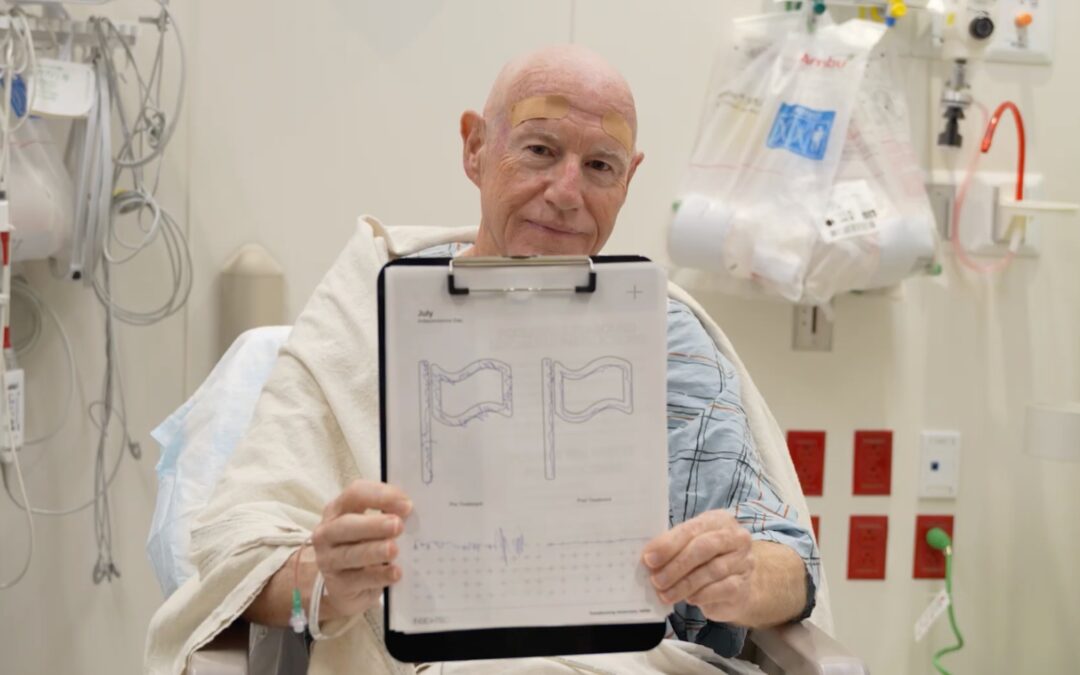
Ground-Breaking HiFu Treatment Re-Opens a Door
Innovative non-invasive essential tremor treatment puts car enthusiast back in the driver’s seat Dan lived with...
Full Patient Story: Chris’s Recovery After L4–5 Posterior Lumbar Interbody Fusion (PLIF)
How an L4–5 Posterior Lumbar Fusion Gave Chris Feeling in His Leg Again and His Life Back Chris was only in his early...

Back in the Game: Brian’s Recovery After C5–6 Disc Replacement
Neck pain and cervical radiculopathy stole his mobility, his golf swing, and his comfort, an artificial disc...

New Jersey Brain and Spine Launches $2000 Healthcare Scholarship to Support Next Generation of Healthcare Professionals
Investing in the future of healthcare: Annual scholarship open to high school and undergraduate students from or...