Craniosynostosis Surgery: What Families Need to Know
If your infant has been diagnosed with craniosynostosis, you have likely spent time reading, researching, and asking questions. This is a condition that can look alarming when first discovered, and yet, with the right surgical team and the right timing, most children do remarkably well.
Craniosynostosis surgery is a procedure performed in infancy to correct the abnormal fusion of one or more of the skull’s growth plates. At New Jersey Brain and Spine (NJBS), our pediatric neurosurgery team provides craniosynostosis surgery and evaluation for families across northern New Jersey, offering subspecialized expertise in Bergen County, Paramus, and the broader tri-state area, close to home.
What Is Craniosynostosis Surgery?
Craniosynostosis is a congenital condition in which one or more of the fibrous joints between a baby’s skull bones, called cranial sutures, fuse prematurely before the brain has finished developing. When premature fusion occurs, the skull cannot expand in the direction of the fused suture, leading to abnormal head shape and, in some cases, increased pressure inside the skull that can affect brain development.
Craniosynostosis surgery is performed to release the fused suture, reshape the skull, and create the space the growing brain needs. Most procedures are performed in the first year of life, with timing depending on the specific suture involved, the surgical approach, and the child’s overall health.
Who Is a Candidate for Craniosynostosis Surgery?
Surgery is typically recommended for infants when craniosynostosis is confirmed on imaging and causing an abnormal skull shape, affecting or at risk of affecting brain development or intracranial pressure, or involving one or more sutures that require correction.
Evaluating Your Child Before Recommending Surgery
Before recommending surgery, the NJBS pediatric neurosurgery team completes a full evaluation to confirm the diagnosis, identify the specific sutures involved, and rule out conditions that may mimic craniosynostosis in appearance. Not all asymmetric head shapes in newborns are craniosynostosis. Positional plagiocephaly, commonly called flat head syndrome, is a separate condition that does not require surgery and can often be managed with repositioning techniques or cranial helmet therapy. The NJBS team will clearly explain the diagnosis and, if surgery is recommended, precisely why it is the appropriate path for your child.
What to Expect: Before, During, and After Craniosynostosis Surgery
Preparing for Craniosynostosis Surgery
- Your child will undergo a complete neurosurgical evaluation, including review of imaging studies. A CT scan with 3D reconstruction is the standard tool for surgical planning in craniosynostosis cases.
- The surgical team will explain which approach is recommended based on your child’s age and specific anatomy: open cranial vault remodeling or minimally invasive endoscopic surgery.
- Pre-operative lab work and medical clearance will be completed. Families receive detailed instructions including fasting guidelines and what to expect on the day of surgery.
- The NJBS team walks families through the full timeline: how long the procedure takes, where your child will be monitored during recovery, and when parents will be able to see them.
What Happens During Craniosynostosis Surgery
Craniosynostosis surgery is performed under general anesthesia. Two main approaches are used depending on the child’s age and the specific suture involved:
- Open cranial vault remodeling: the most common approach for infants older than 6 months. The skull bones are carefully reshaped to correct head shape and allow normal brain growth. Procedure typically takes 3 to 5 hours, and the neurosurgeon will team up with a plastic surgeons for maximal cosmetic results.
- Minimally invasive endoscopic surgery: an option for infants under 6 to 8 months of age with certain suture types. Small incisions are used with an endoscope to remove the fused suture. This approach involves less blood loss, shorter operative time, and a shorter hospital stay compared to open surgery. A cranial orthosis, or helmet, is worn after surgery to guide normal skull shaping during the healing period.
Recovery After Craniosynostosis Surgery
- Most children undergoing open cranial vault remodeling stay in the hospital 3 to 5 days, including time in a pediatric intensive care unit for close monitoring in the immediate post-operative period.
- Swelling around the eyes and forehead is normal and typically peaks 2 to 3 days after surgery before gradually resolving over 1 to 2 weeks.
- Most infants return to normal feeding patterns and activity levels within 2 to 4 weeks after surgery.
- Follow-up appointments are scheduled at regular intervals to monitor skull development, brain growth, and confirm that the correction is progressing as expected.
- Long-term outcomes for children treated at the appropriate age are generally excellent, with normal head shape and brain development in most cases.
Benefits of Craniosynostosis Surgery at NJBS
The surgical center where a child receives craniosynostosis care matters, both in terms of outcomes and in the experience your family has throughout the process. Specific benefits of choosing NJBS include:
- Fellowship-trained pediatric neurosurgery: your child is evaluated and treated by Dr Aryan Ali, a subspecialist whose training and practice focus specifically on congenital and acquired conditions of the brain and skull in infants and children, not a general neurosurgeon who occasionally sees pediatric cases.
- Both surgical approaches available: NJBS offers both open cranial vault remodeling and minimally invasive endoscopic craniosynostosis surgery, meaning your child’s team recommends the approach that is right for their age and anatomy.
- HUMC affiliation: inpatient surgical care is supported by the full resources of Hackensack University Medical Center, including pediatric anesthesiologists, pediatric critical care specialists, and pediatric nursing teams.
- Local access for northern NJ families: serving patients in Bergen County, Paramus, and throughout the tri-state area, families do not need to travel to a major children’s hospital for expert craniosynostosis care.
New Jersey Brain and Spine is ranked among the top neurosurgical practices in the country by Castle Connolly, earning a national top-5 recognition for four consecutive years, a recognition that reflects the clinical depth and outcomes that have made NJBS one of the most trusted practices in the region.
Frequently Asked Questions
At what age should craniosynostosis surgery be performed?
How serious is craniosynostosis surgery?
Does craniosynostosis always require surgery?
Will my child's head shape fully correct after surgery?
Can craniosynostosis recur after surgery?
If your child has been diagnosed with craniosynostosis, or if your pediatrician has raised concerns about your infant’s skull shape, the pediatric neurosurgery specialists at New Jersey Brain and Spine are here. Serving families across northern New Jersey including Bergen County, Paramus, and the tri-state area.
Have More Questions about This Condition
New Jersey Brain and Spine Earns #3 National Ranking For Neurosurgical Practices
New Jersey Brain and Spine has once again been recognized among the nation’s elite neurosurgical practices—this time...
Patient Story: Patient Gets Fitness Career Back in Shape Thanks to Dr. Roth
Robin Bray is the owner of FitnessBarre™, a popular local workout studio in Midland Park, New Jersey. The...
NJBS Highlighted for Advanced Tremor Treatment With Hackensack Meridian Health
New Jersey Brain & Spine was recently featured alongside Hackensack Meridian Health, highlighting the impact of...

Patient Story: Ashley’s Recovery After Cervical Disc Herniation
A stroke at birth left Ashley with cerebral palsy and limited mobility on her right side. So when she woke up at 1...

Back on the Competition Track: A Young Athlete’s Recovery After L4–L5 Disc Herniation Surgery
Severe nerve compression brought life to a halt—lumbar microdiscectomy helped him reclaim strength, mobility, and...
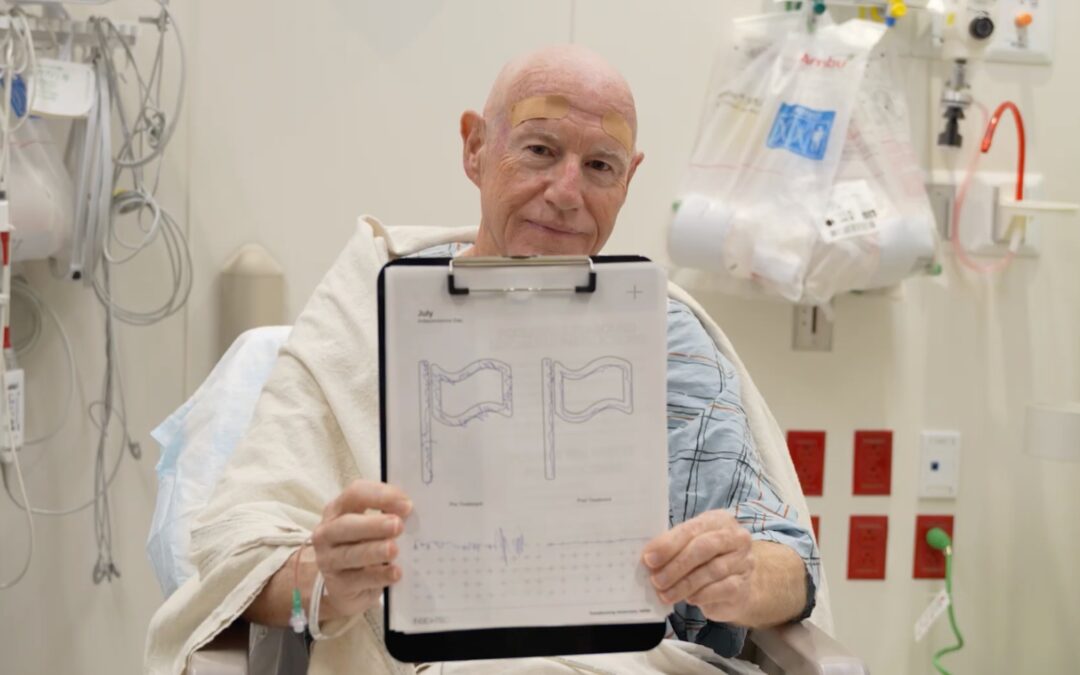
Ground-Breaking HiFu Treatment Re-Opens a Door
Innovative non-invasive essential tremor treatment puts car enthusiast back in the driver’s seat Dan lived with...
Full Patient Story: Chris’s Recovery After L4–5 Posterior Lumbar Interbody Fusion (PLIF)
How an L4–5 Posterior Lumbar Fusion Gave Chris Feeling in His Leg Again and His Life Back Chris was only in his early...
Back in the Game: Brian’s Recovery After C5–6 Disc Replacement
Neck pain and cervical radiculopathy stole his mobility, his golf swing, and his comfort, an artificial disc...

New Jersey Brain and Spine Launches $2000 Healthcare Scholarship to Support Next Generation of Healthcare Professionals
Investing in the future of healthcare: Annual scholarship open to high school and undergraduate students from or...