Chiari malformation is diagnosed far more often than it once was, in part because MRI has made it possible to identify structural abnormalities that were previously invisible. For many patients, the diagnosis comes after years of unexplained headaches, neck pain, balance problems, or arm and hand symptoms. When symptoms are present and linked to the malformation, Chiari decompression surgery is the primary treatment: the only intervention that addresses the underlying anatomy.
This page explains exactly what that surgery involves, who is a candidate, and what the recovery process looks like at New Jersey Brain and Spine.
WHAT IS CHIARI DECOMPRESSION SURGERY?
Chiari decompression surgery, also called posterior fossa decompression or suboccipital decompression, is a neurosurgical procedure that creates more space at the base of the skull and top of the spinal canal, relieving pressure on the brainstem, cerebellum, and upper spinal cord caused by Chiari malformation.
In Chiari type I malformation (the most common form in adults), the cerebellar tonsils, the lower portion of the cerebellum, herniate downward through the foramen magnum (the opening at the base of the skull) into the upper spinal canal. This displacement compresses the brainstem and can obstruct the normal flow of cerebrospinal fluid (CSF). Surgery addresses both of these problems: it enlarges the posterior fossa to give the cerebellar tonsils room, and it restores normal CSF circulation.
Surgery is not recommended for all patients with Chiari type I. Many people with this finding on MRI have no symptoms and do not require any treatment. The decision to proceed with surgery is based on the presence, severity, and trajectory of symptoms, not on imaging findings alone.
WHO IS A CANDIDATE FOR CHIARI DECOMPRESSION SURGERY?
At New Jersey Brain and Spine, the decision to recommend Chiari decompression surgery is based on careful evaluation of each patient’s clinical picture. Surgery is typically recommended for patients who have:
- Symptomatic Chiari type I malformation: Symptoms directly attributable to the malformation that significantly affect quality of life and have not responded to conservative management
- Headaches characteristic of Chiari: Exertional headaches provoked by coughing, sneezing, bearing down, or physical activity, particularly pain at the back of the head
- Neurological symptoms: Progressive weakness, numbness, or coordination difficulties involving the arms, legs, or gait
- Syringomyelia: A fluid-filled cavity (syrinx) within the spinal cord that develops as a consequence of impaired CSF flow from the Chiari herniation. Syringomyelia may cause progressive neurological deterioration and often warrants surgical intervention even when Chiari symptoms are mild.
- Brainstem compression: MRI findings indicating direct compression of the brainstem with corresponding symptoms
Patients with incidental Chiari findings on MRI, discovered while imaging for another reason, and no symptoms referable to the malformation are typically managed with observation and periodic follow-up rather than surgery.
The existing treatment overview for Chiari malformation at NJBS provides additional context about non-surgical management approaches.
BEFORE THE PROCEDURE
Preparation for Chiari decompression surgery at NJBS includes:
- Pre-operative evaluation: Comprehensive neurological examination, review of current and prior MRI of the brain and entire spine, and assessment of any cardiovascular or metabolic conditions requiring management before surgery.
- Dynamic MRI (in selected patients): Some patients undergo flexion-extension MRI or CSF flow studies to assess the degree of CSF obstruction and plan the extent of decompression needed.
- Surgical planning: The operating neurosurgeon determines whether simple bony decompression alone is likely sufficient, or whether a duraplasty (expansion of the dura mater) will be needed to achieve adequate CSF flow restoration.
- Medications and supplements: Blood thinners, NSAIDs, and certain supplements must be stopped before surgery.
- Anesthesia consultation: General anesthesia is used for all Chiari decompression procedures.
- Pre-operative instructions: NJBS provides detailed written instructions regarding fasting, wound care preparation, and what to arrange at home for the immediate recovery period.
DURING THE PROCEDURE
Chiari decompression surgery is performed with the patient under general anesthesia, typically with intraoperative monitoring of brainstem function. The surgical sequence proceeds as follows:
- Positioning: The patient is positioned prone (face down) with the head secured in a head holder and the neck flexed to open the posterior fossa. Careful positioning protects the cervical spine and allows the surgeon clear access to the back of the skull.
- Incision: A vertical incision is made in the midline at the back of the head and upper neck, typically 5 to 8 cm in length.
- Bony decompression (suboccipital craniectomy): A portion of the occipital bone at the base of the skull, the posterior fossa, is removed using surgical instruments. In most cases, the posterior arch of C1 (the top cervical vertebra) is also removed. This creates significantly more space for the brainstem and cerebellar tonsils.
- Evaluation of dural pulsations: After bony decompression, the neurosurgeon assesses whether pulsations of the dura, the fibrous covering of the brain and spinal cord, are adequate. Adequate pulsations suggest that CSF flow has been restored.
- Duraplasty (if needed): When bony decompression alone is not sufficient to restore CSF flow, the dura is carefully opened and a patch graft (using the patient’s own tissue, synthetic material, or cadaveric material) is sewn in place to create additional space beneath the dura. Duraplasty is associated with greater CSF flow improvement in cases with more significant obstruction but carries a small additional risk of CSF leakage.
- Closure: The surgical field is carefully inspected, and the incision is closed in layers. Total operative time is typically 2 to 4 hours.
AFTER THE PROCEDURE AND RECOVERY
Hospital Stay: Most patients remain hospitalized for 2 to 4 days after Chiari decompression surgery, with close monitoring for CSF leakage, neurological changes, and wound healing.
Immediate Post-Operative Period: The most common early post-operative symptoms are neck stiffness and incisional pain. Most patients find that Chiari headaches (exertional headaches at the back of the head) improve within days to weeks of surgery. Neurological symptoms, particularly those present for a shorter time, also tend to improve, though the timeline varies.
Activity Restrictions:
- Strenuous activity, heavy lifting, and vigorous exercise are restricted for 6 to 8 weeks
- Driving restrictions apply until the surgeon clears the patient (typically 4 to 6 weeks)
- Return to desk work: typically 4 to 6 weeks
- Return to physical occupations: 8 to 12 weeks depending on the nature of the work
Physical Therapy: Gentle cervical physical therapy is often recommended beginning 4 to 6 weeks after surgery to restore neck range of motion and strength.
Follow-Up Imaging: MRI of the brain and spine is typically obtained at 3 to 6 months post-operatively to assess decompression adequacy and, when syringomyelia was present, to evaluate syrinx resolution.
Long-Term Outcomes: The majority of appropriately selected patients experience meaningful symptom improvement after Chiari decompression surgery. Exertional headaches are the symptom most likely to resolve completely. Neurological symptoms improve in many patients, though the degree of recovery depends on how long the nerve dysfunction was present before surgery. See more on long-term management after Chiari surgery on our blog.
RISKS AND COMPLICATIONS
Chiari decompression surgery is performed at a specialized neurosurgical center, but as with any surgical procedure, risks exist:
- CSF leakage: The most common complication, occurring in approximately 5 to 10% of cases. Most resolve with conservative management (bed rest, wound care, lumbar drain); rarely, re-operation is needed.
- Wound infection: Uncommon but possible; treated with antibiotics.
- Meningitis (aseptic or bacterial): A rare but serious complication.
- Neurological worsening: A small risk of increased neurological symptoms exists in any cranial or spinal procedure. The NJBS team uses intraoperative neuromonitoring to minimize this risk.
- Need for re-operation: In cases where the decompression was insufficient, revision surgery may be required.
- Incomplete symptom resolution: Not all Chiari symptoms resolve after surgery, particularly those of long duration or those related to other concurrent conditions.
Frequently Asked Questions (FAQs) About Chiari Decompression Surgery
How do I know if I need Chiari decompression surgery?
How long does Chiari decompression surgery take?
Will Chiari surgery cure my headaches?
What happens if I don't have Chiari surgery?
Can Chiari malformation come back after surgery?
SCHEDULE A CONSULTATION
NJBS serves patients across northern New Jersey and the greater tri-state area, with offices in Paramus, Hackensack, Montclair, Montvale, Annandale, and Englewood. No referral is required to schedule a consultation.
Schedule a consultation or request a second opinion today.
Source: Mayo Clinic
Have More Questions about This Condition
New Jersey Brain and Spine Earns #3 National Ranking For Neurosurgical Practices
New Jersey Brain and Spine has once again been recognized among the nation’s elite neurosurgical practices—this time...
Patient Story: Patient Gets Fitness Career Back in Shape Thanks to Dr. Roth
Robin Bray is the owner of FitnessBarre™, a popular local workout studio in Midland Park, New Jersey. The...
NJBS Highlighted for Advanced Tremor Treatment With Hackensack Meridian Health
New Jersey Brain & Spine was recently featured alongside Hackensack Meridian Health, highlighting the impact of...

Patient Story: Ashley’s Recovery After Cervical Disc Herniation
A stroke at birth left Ashley with cerebral palsy and limited mobility on her right side. So when she woke up at 1...

Back on the Competition Track: A Young Athlete’s Recovery After L4–L5 Disc Herniation Surgery
Severe nerve compression brought life to a halt—lumbar microdiscectomy helped him reclaim strength, mobility, and...
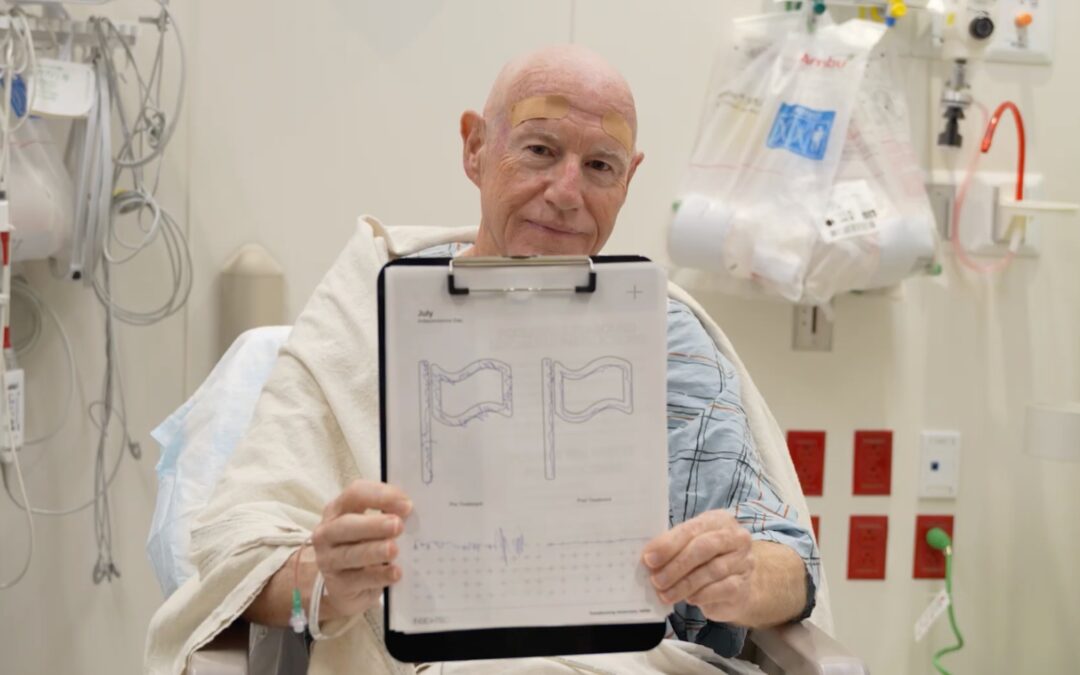
Ground-Breaking HiFu Treatment Re-Opens a Door
Innovative non-invasive essential tremor treatment puts car enthusiast back in the driver’s seat Dan lived with...
Full Patient Story: Chris’s Recovery After L4–5 Posterior Lumbar Interbody Fusion (PLIF)
How an L4–5 Posterior Lumbar Fusion Gave Chris Feeling in His Leg Again and His Life Back Chris was only in his early...
Back in the Game: Brian’s Recovery After C5–6 Disc Replacement
Neck pain and cervical radiculopathy stole his mobility, his golf swing, and his comfort, an artificial disc...

New Jersey Brain and Spine Launches $2000 Healthcare Scholarship to Support Next Generation of Healthcare Professionals
Investing in the future of healthcare: Annual scholarship open to high school and undergraduate students from or...