CT angiography (CTA) is a non-invasive imaging test that uses computed tomography (CT) with contrast dye to produce detailed images of the brain’s blood vessels, helping detect aneurysms, vascular narrowing (stenosis), and other abnormalities.
Computerized Tomography (CT)
Despite the fact that MR has largely superseded CT in defining the anatomy, CT remains a necessary tool for the neurosurgeon in a variety of circumstances. CT is used routinely in emergency settings and in the immediate postoperative period due to its availability, short acquisition time and sensitivity in demonstrating potential bleeding complications. This study is also incredibly sensitive in assessing for hydrocephalus and ventricular anatomy. For tumors of the pituitary and skull base, CT provides a superior view of intricate and delicate bony anatomy of the paranasal sinuses and inner ear. CT also gives a detailed view of bony spinal anatomy and the adequacy of positioning of spinal implants.
CT Angiography (CTA)
This diagnostic and non-invasive test is exceedingly sensitive in assessing the cerebral vascular anatomy and detecting the presence of cerebral aneurysm. It has a variety of applications including determining the presence of vasospasm in subarachnoid hemorrhage and is the study of choice for intra-operative navigation in endonasal endoscopic surgery.
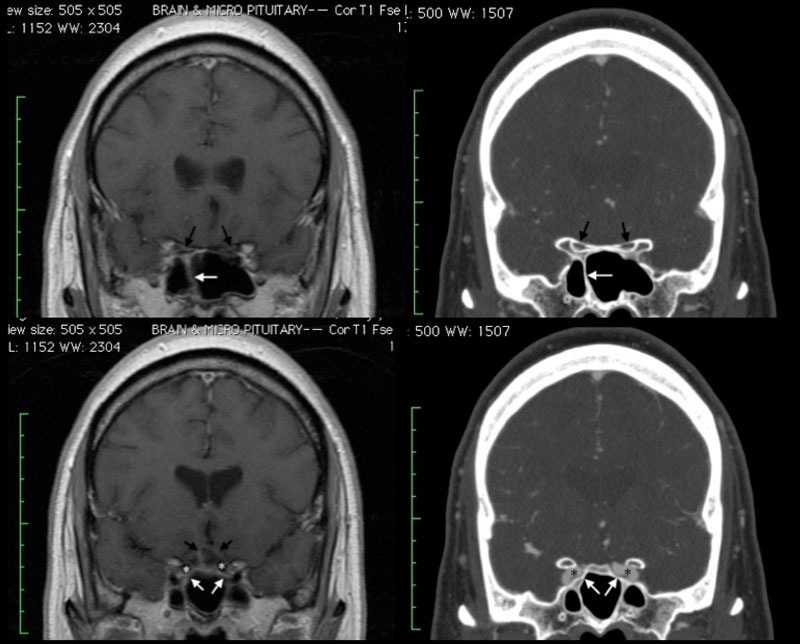
Figure 1
These images highlight some of the differences between CT (right) and MR (left) imaging. Coronal views of the skull base demonstrate details of the bony anatomy of the sinuses (white arrow) as well as the bony canals transmitting the optic nerve (black arrows) with greater clarity than on MR. CT angiography, furthermore, outlines with precision the relationship of arteries (asterisk) to the overlying bony structures. Note, however, the detail of brain anatomy seen on MR that is not well visualized on CT.
Frequently Asked Questions (FAQs) About CT Angiography (CTA)
How is CTA different from a regular CT scan?
When is CTA used during surgery?
Have More Questions about This Condition
New Jersey Brain and Spine Earns #3 National Ranking For Neurosurgical Practices
New Jersey Brain and Spine has once again been recognized among the nation’s elite neurosurgical practices—this time...
Patient Story: Patient Gets Fitness Career Back in Shape Thanks to Dr. Roth
Robin Bray is the owner of FitnessBarre™, a popular local workout studio in Midland Park, New Jersey. The...
NJBS Highlighted for Advanced Tremor Treatment With Hackensack Meridian Health
New Jersey Brain & Spine was recently featured alongside Hackensack Meridian Health, highlighting the impact of...

Patient Story: Ashley’s Recovery After Cervical Disc Herniation
A stroke at birth left Ashley with cerebral palsy and limited mobility on her right side. So when she woke up at 1...

Back on the Competition Track: A Young Athlete’s Recovery After L4–L5 Disc Herniation Surgery
Severe nerve compression brought life to a halt—lumbar microdiscectomy helped him reclaim strength, mobility, and...
Ground-Breaking HiFu Treatment Re-Opens a Door
Innovative non-invasive essential tremor treatment puts car enthusiast back in the driver’s seat Dan lived with...
Full Patient Story: Chris’s Recovery After L4–5 Posterior Lumbar Interbody Fusion (PLIF)
How an L4–5 Posterior Lumbar Fusion Gave Chris Feeling in His Leg Again and His Life Back Chris was only in his early...
Back in the Game: Brian’s Recovery After C5–6 Disc Replacement
Neck pain and cervical radiculopathy stole his mobility, his golf swing, and his comfort, an artificial disc...

New Jersey Brain and Spine Launches $2000 Healthcare Scholarship to Support Next Generation of Healthcare Professionals
Investing in the future of healthcare: Annual scholarship open to high school and undergraduate students from or...