A minimally invasive approach to spinal fusion that preserves muscle, reduces recovery time, and restores stability to the lower back.
Chronic back and leg pain from a degenerating or unstable lumbar spine can limit your ability to work, exercise, and enjoy daily life. If conservative treatments like physical therapy and injections have not provided lasting relief, your spine surgeon may recommend minimally invasive transforaminal lumbar interbody fusion, or MIS-TLIF. This advanced surgical technique uses specialized instruments and small incisions to fuse unstable vertebrae, rebuild spinal height, and relieve nerve compression. At New Jersey Brain and Spine, our fellowship-trained surgeons perform MIS-TLIF to restore stability and help patients return to the activities that matter to them.
What Is MIS-TLIF?
MIS-TLIF stands for Minimally Invasive Transforaminal Lumbar Interbody Fusion. While the term sounds technical, each part describes what the procedure does.
Transforaminal means the surgeon approaches the spine through a tube, from the side and back, using the natural corridor (called the foramen) between the two bones being fused. Interbody means the fusion takes place between 2 vertebrae in your lower back, in the space that formally housed your disc. Fusion means 2 bones are biologically joined together to stop abnormal motion, to improve the shape of your spine, or to make the foramen larger. Minimally invasive means the surgeon uses 2 to 3 small incisions, typically less than 1 inch each, rather than a single long incision.
During the procedure, the damaged disc between the vertebrae is carefully removed. A spacer cage filled with bone graft material is inserted into the empty disc space to restore height and alignment. Titanium screws and rods are secured to the vertebrae, either on the side of the approach or on both sides, locking the fusion in place. The result is a stable junction between bones, which improves both the back and leg pain
Who Is a Candidate for MIS-TLIF?
MIS-TLIF is recommended for patients with specific conditions of the lumbar spine who have tried conservative care first and continue to have pain, weakness, or numbness.
Common conditions that may benefit from MIS-TLIF include degenerative disc disease with instability, lumbar spondylolisthesis (slippage of one vertebra over another), lumbar spinal stenosis with instability, and recurrent disc herniation. Your surgeon will order imaging studies such as X-rays, MRI, or CT scans to confirm that your condition is appropriate for fusion.
Conservative Care First
Before MIS-TLIF is considered, NJBS recommends exhausting conservative treatment options. This typically includes physical therapy, anti-inflammatory medications, lifestyle modifications such as activity adjustment and weight management, and epidural steroid injections. These treatments relieve symptoms in many patients and help avoid surgery altogether. Surgery is recommended only when conservative options have been tried over 3 to 6 months or longer, symptoms persist, neurological symptoms are progressing, or quality of life is significantly limited despite treatment.
What to Expect: Before, During, and After MIS-TLIF
Before the Procedure
Your NJBS surgeon will schedule a pre-operative evaluation 1 to 2 weeks before surgery. During this visit, a detailed medical history is taken, and any medications you are taking will be reviewed. Blood tests and an EKG may be ordered to ensure you are healthy enough for surgery. You will be advised to stop certain medications such as blood thinners, and you will receive nothing-by-mouth instructions, typically starting at midnight the night before surgery. Bring a list of all medications and allergies, and arrange for a trusted driver to take you home after discharge.
During the Procedure
You will receive general anesthesia, so you will be asleep throughout. The surgical team uses fluoroscopic X-ray guidance to pinpoint the exact vertebrae that need fusion. The surgeon makes 2 to 3 small incisions on the back, each less than 1 inch long. Special tubular retractors gently separate muscle fibers and create a narrow corridor to the spine, avoiding the need to cut large muscle groups. This is the key difference from open fusion surgery, which requires a 2- to 5-inch incision and more muscle trauma.
The damaged disc is carefully removed using specialized instruments. A spacer cage is positioned in the empty disc space to restore the natural height and angle of the spine. Bone graft material is packed around the cage to encourage fusion. Metal pedicle screws and rods are inserted through separate small incisions to stabilize the vertebrae. The screws are placed with the aid of live xray or by a robot The entire procedure typically takes 1 to 2 hours depending on the number of levels being fused. Once the fusion is secure, the incisions are closed with dissolving sutures.
Recovery and What Comes Next
Most patients stay in the hospital for 1 to 2 days. On the day of surgery or the next morning, you will be encouraged to get out of bed and walk. You will be given pain medication to manage post-operative discomfort. You should avoid heavy lifting, bending, or twisting for the first 6 weeks. Light activity such as walking is encouraged. Return to desk work and light office duties is typically possible within 4 to 6 weeks. Return to manual labor, heavy lifting, or high-impact activities such as running or jumping usually requires 3 months.
Physical therapy typically begins within 4 weeks of surgery and continues for 6 to 8 weeks. Your therapist will guide you through gentle exercises to restore mobility, strength, and flexibility. Most patients notice improvement in leg pain and numbness within 4 to 6 weeks as swelling decreases and nerves recover. Back pain from the fusion site itself may take 2 to 3 months to settle. Full fusion of the bone graft typically takes 6 to 12 months.
Benefits of MIS-TLIF at NJBS
Patients often choose MIS-TLIF over open fusion because of the benefits that the minimally invasive approach provides. Smaller incisions mean less blood loss, reduced risk of infection, and minimal trauma to the muscles that support your spine. Hospital stay is typically 1 to 2 days rather than 3 to 5 days with open surgery. Recovery is faster, allowing you to return to desk work within 4 to 6 weeks and gradually resume normal activities.
NJBS surgeons are fellowship-trained in minimally invasive spine surgery and have expertise in the latest instrumentation and techniques. We perform fusion surgery with precision imaging and navigation technology to ensure accurate placement of the cage and screws. Our spine center is affiliated with Hackensack Meridian Health University Hospital (HUMC), a leading academic medical center, and is a recognized spine center of excellence. Many of our surgeons are recognized by Castle Connolly as top doctors in their field.
Frequently Asked Questions (FAQs) About Minimally Invasive TLIF (MIS-TLIF)
How long does the surgery take?
How long is the hospital stay?
When can I return to work?
What are the risks of MIS-TLIF?
How much pain will I have after surgery?
Have More Questions about This Condition
New Jersey Brain and Spine Earns #3 National Ranking For Neurosurgical Practices
New Jersey Brain and Spine has once again been recognized among the nation’s elite neurosurgical practices—this time...
Patient Story: Patient Gets Fitness Career Back in Shape Thanks to Dr. Roth
Robin Bray is the owner of FitnessBarre™, a popular local workout studio in Midland Park, New Jersey. The...
NJBS Highlighted for Advanced Tremor Treatment With Hackensack Meridian Health
New Jersey Brain & Spine was recently featured alongside Hackensack Meridian Health, highlighting the impact of...

Patient Story: Ashley’s Recovery After Cervical Disc Herniation
A stroke at birth left Ashley with cerebral palsy and limited mobility on her right side. So when she woke up at 1...

Back on the Competition Track: A Young Athlete’s Recovery After L4–L5 Disc Herniation Surgery
Severe nerve compression brought life to a halt—lumbar microdiscectomy helped him reclaim strength, mobility, and...
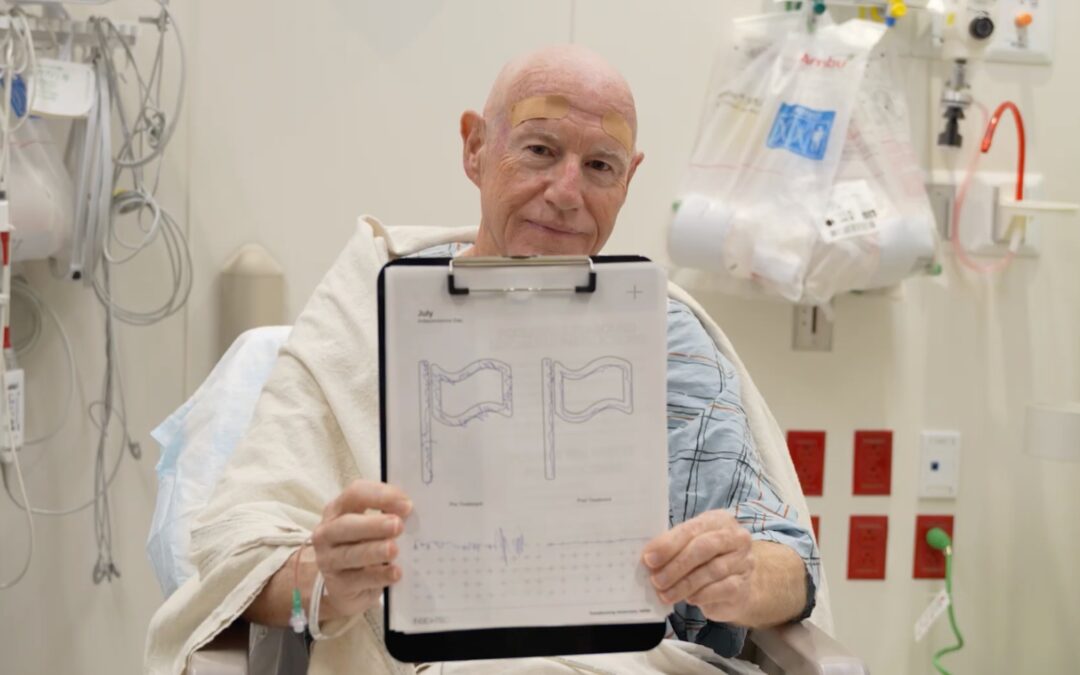
Ground-Breaking HiFu Treatment Re-Opens a Door
Innovative non-invasive essential tremor treatment puts car enthusiast back in the driver’s seat Dan lived with...
Full Patient Story: Chris’s Recovery After L4–5 Posterior Lumbar Interbody Fusion (PLIF)
How an L4–5 Posterior Lumbar Fusion Gave Chris Feeling in His Leg Again and His Life Back Chris was only in his early...
Back in the Game: Brian’s Recovery After C5–6 Disc Replacement
Neck pain and cervical radiculopathy stole his mobility, his golf swing, and his comfort, an artificial disc...

New Jersey Brain and Spine Launches $2000 Healthcare Scholarship to Support Next Generation of Healthcare Professionals
Investing in the future of healthcare: Annual scholarship open to high school and undergraduate students from or...