Trigeminal Neuralgia Treatments Compared: MVD vs. Gamma Knife vs. Rhizotomy

When a patient comes in describing trigeminal neuralgia, the story is almost unmistakable. They talk about a sudden, severe jolt of pain across one side of the face, often compared to an electric shock or a lightning strike. It may last only seconds, but it can stop a person mid-sentence. What makes it so distressing is how easily it is triggered: a light touch to the cheek, a gust of wind, chewing a meal, brushing the teeth, or even talking can set off an attack. Many patients arrive having already stopped eating on one side, shaving, or applying makeup, simply out of fear of provoking the next episode.
This condition is one of the more painful problems we treat, but it is also one of the more treatable. The key is understanding why the pain happens and matching the right treatment to the right patient at the right time.
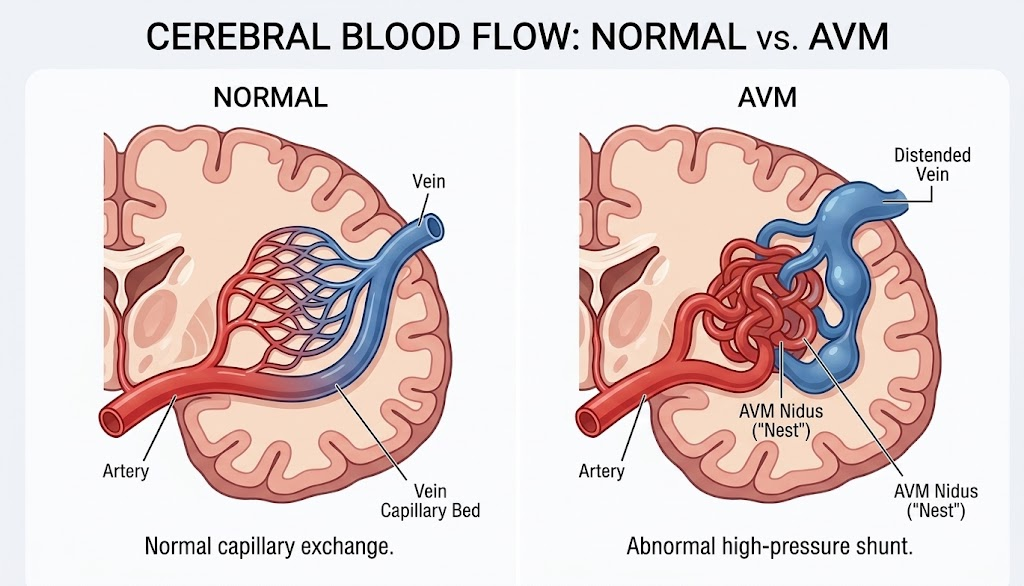
The trigeminal nerve is the main sensation nerve for the face. It carries feeling from the forehead, cheek, and jaw back to the brainstem. In most cases of classic trigeminal neuralgia, the trouble starts at the point where this nerve exits the brainstem. A nearby blood vessel, often a small artery, sits against the nerve and pulses against it.
Over time, that constant contact irritates and wears down the nerve’s protective insulation, a fatty coating called myelin. Think of myelin like the plastic coating on an electrical wire. When that coating frays, the wire underneath can misfire and short-circuit. In the same way, a trigeminal nerve with damaged insulation sends abnormal, exaggerated pain signals in response to input that should feel completely normal, like a breeze or a toothbrush.
While a blood vessel compressing the nerve is the most common cause, it is not the only one. In some patients, the irritation can relate to other conditions, which is one reason a careful evaluation and a high-quality MRI matter so much before any decision is made.
An MRI can sometimes show a vessel sitting near the nerve, but imaging alone does not dictate treatment. We treat the patient and their pain pattern, not the picture on the scan.
Here is a point we emphasize with every trigeminal neuralgia patient: procedures are not the starting line. The first-line treatment is medication, not surgery.
Certain anti-seizure medications are remarkably effective at calming an overactive trigeminal nerve. The two we reach for most often are:
These medications work by stabilizing the nerve so it stops firing so easily. Many patients get meaningful, sometimes complete, relief from medication alone and never need a procedure. We only begin discussing procedures when medications fail to control the pain, when side effects become intolerable, or when doses that once worked start losing their effect.
At NJBS, appropriate medication management is generally the first step before considering a procedure for trigeminal neuralgia.
When medications are no longer enough, three well-established procedures come into the conversation. They differ in how invasive they are, how quickly they work, how long the relief tends to last, and what tradeoffs they carry. Understanding these differences is what allows us to tailor the choice to the individual.
| Feature | Microvascular Decompression (MVD) | Gamma Knife (Radiosurgery) | Rhizotomy (Percutaneous) |
|---|---|---|---|
| What it is | Open surgery that moves the blood vessel off the nerve | Focused radiation to the nerve, no incision | Needle-based lesioning of the nerve (glycerol, balloon, or radiofrequency) |
| Invasiveness | Most invasive; general anesthesia, small opening behind the ear | Noninvasive; no incision | Minimally invasive; needle through the cheek |
| How quickly it works | Often immediate or within days | Delayed; weeks to a few months | Usually rapid, often right away |
| Durability | Most durable; longest-lasting relief | Good, but relief can fade over years | Effective, but recurrence is more common over time |
| Best-suited candidates | Younger, healthier patients who can tolerate surgery; clear vessel compression on MRI | Older patients or those who prefer or require a noninvasive option | Older or medically fragile patients needing quick relief |
| Key tradeoffs | Addresses the root cause; carries the risks of open surgery | Painless and outpatient; slow onset and possible numbness | Fast and repeatable; higher risk of facial numbness |
No single one of these is the best for everyone. The right answer depends on age, overall health, what the MRI shows, and what has already been tried.
At NJBS, we do not assign a procedure based on a label. We weigh a patient’s age, their general medical health and ability to tolerate anesthesia, the specific findings on their MRI, and their full history of prior treatments. A 45-year-old in good health with obvious vascular compression is a very different candidate from an 80-year-old on blood thinners with other medical concerns, even if their pain sounds identical.
This is also where a specialist evaluation, and sometimes a second opinion, can be particularly valuable. Trigeminal neuralgia can be mimicked by other conditions, and the durability of relief varies meaningfully between these procedures. We frequently see patients in our New Jersey practice who were told surgery was their only path, when a medication adjustment or a less invasive option was still very reasonable, and occasionally the reverse.
A 46-year-old teacher came to us after two years of classic electric-shock pain in the right cheek and jaw. Carbamazepine controlled it beautifully at first, but the dose needed to keep working kept climbing, and the side effects were making it hard for her to teach. She was otherwise healthy. Her MRI clearly showed an artery pressing on the nerve at the brainstem. Given her age, good health, and clear vascular compression, we recommended microvascular decompression to address the underlying cause and offer the most durable relief. She woke from surgery pain-free.
A 79-year-old man with a history of heart disease and long-term use of blood thinners had similar facial pain that medication no longer controlled. Open surgery carried real risk for him, and he wanted to avoid a long recovery. After discussing his options, we chose a percutaneous rhizotomy, a quick, needle-based procedure done without a large incision. He accepted the higher chance of some facial numbness in exchange for fast relief and a gentler recovery, and his pain settled within a day.
Note: These patient scenarios are representative, hypothetical examples used for illustrative purposes. Because every patient and medical history is unique, actual treatment recommendations and surgical settings depend entirely on your individual health circumstances and a thorough evaluation by your care team.
Facial pain has many causes, and not all of them are trigeminal neuralgia. Dental problems, sinus issues, and other nerve conditions can feel similar. It is worth seeking a specialist evaluation when:
While trigeminal neuralgia itself is not usually a life-threatening emergency, sudden severe headache, sudden weakness, facial droop, trouble speaking, or vision changes are different and should be treated urgently. If you experience severe symptoms or believe you are having a medical emergency, call 911 or seek immediate medical attention.
No. Medication, usually carbamazepine or oxcarbazepine, is the first-line treatment, and many patients do well on medication alone without ever needing a procedure. Procedures are considered only when medication stops working or its side effects become intolerable.
Microvascular decompression tends to offer the most durable, long-lasting relief because it treats the underlying cause by moving the blood vessel off the nerve. Gamma Knife and rhizotomy can be very effective as well, but relief from them is somewhat more likely to fade over time.
Some numbness is most associated with the rhizotomy procedures, which work by deliberately creating a small, controlled injury to the nerve. MVD does not intentionally damage the nerve, so it is less likely to cause numbness. We discuss this tradeoff carefully with every patient.
Because it uses focused radiation to gradually change how the nerve signals, the effect is delayed. Relief often develops over several weeks to a few months rather than right away, which is an important consideration if your pain is severe and you need faster help.
Yes. Durability depends heavily on the specific procedure. Microvascular decompression (MVD) typically offers the longest-lasting relief, whereas less invasive options like Gamma Knife radiosurgery or rhizotomies generally have a higher rate of recurrence over time. If your pain does return, we can re-evaluate your condition and discuss the next best step.
NJBS serves patients across northern New Jersey and the greater tri-state area, with offices in Paramus, Hackensack, Montclair, Montvale, Annandale, and Englewood. No referral is required to schedule a consultation.