Cerebral Aneurysms: Vessel Wall Mechanics and Rupture Risk
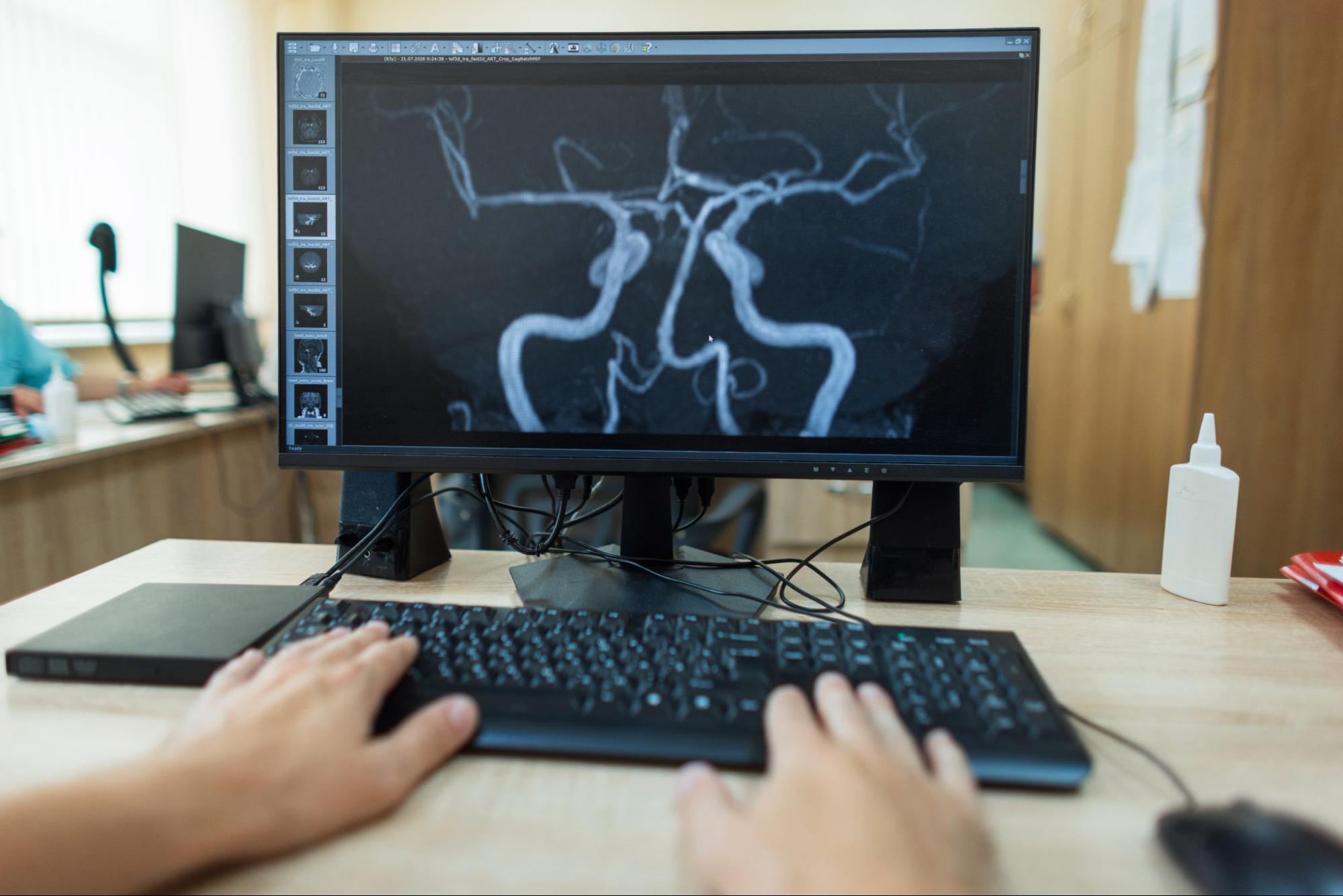
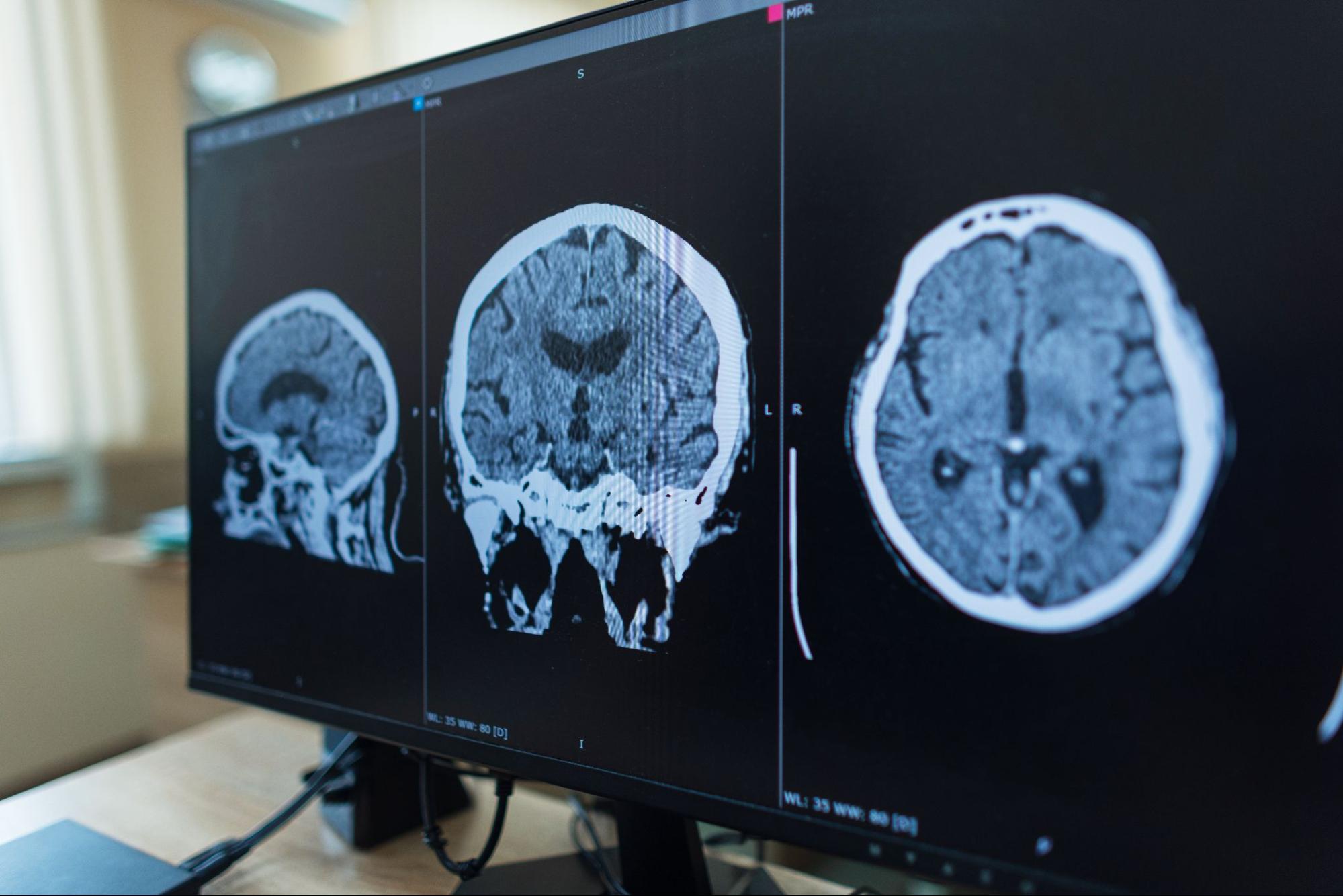
A cerebral aneurysm diagnosis, whether found incidentally or after a rupture, raises an immediate and understandable question: how dangerous is this? The honest answer depends heavily on mechanics: the size, shape, and location of the aneurysm, and what those factors mean for the structural integrity of the vessel wall. The good news is that many aneurysms never rupture and can often be monitored safely. The key is understanding which features increase risk and which do not.
A cerebral aneurysm is a weakened, bulging area in the wall of a blood vessel in the brain, most commonly occurring at branch points where vessels split, since these points experience the greatest hemodynamic stress.
The vessel wall normally has three layers that provide strength and elasticity. In an aneurysm, these layers weaken and thin, most often at the outpouching itself, leaving that area more vulnerable to the ongoing pressure of blood flow than the surrounding healthy vessel.
Aneurysm size gets the most attention, but shape and location matter just as much. A small aneurysm in a high-stress location, or with an irregular shape, can carry meaningfully different risk than a similarly sized aneurysm elsewhere.
Several mechanical factors influence rupture risk, and we weigh all of them together rather than relying on size alone:
| Feature | Unruptured Aneurysm | Ruptured Aneurysm |
|---|---|---|
| Typical presentation | Often asymptomatic, found incidentally | Sudden, severe “thunderclap” headache |
| Urgency | Evaluated based on size, shape, and location | Medical emergency requiring immediate treatment |
| Primary decision factor | Balancing rupture risk against treatment risk | Securing the aneurysm to prevent re-rupture |
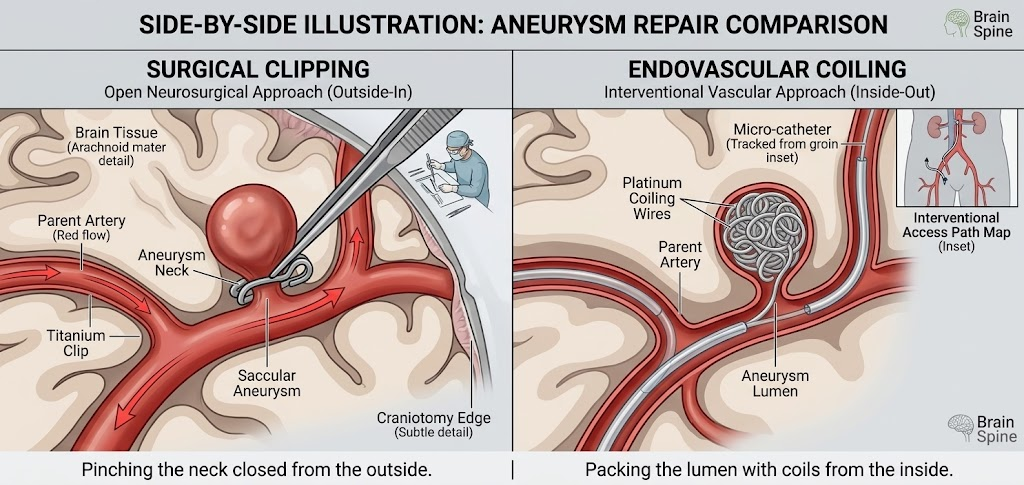
| Treatment options | Observation, or elective clipping/coiling depending on risk factors | Emergency clipping or coiling |
Not necessarily. Many unruptured aneurysms can be safely monitored over time with periodic imaging. The decision to recommend treatment depends on balancing the aneurysm’s estimated rupture risk against the risks of intervention. Factors such as size, shape, location, age, overall health, and family history all contribute to that decision.
Every unruptured aneurysm we see gets evaluated on its own mechanical profile, not just a size cutoff, through our Aneurysm, AVM, and Stroke Center. We also weigh the patient’s overall health and the anticipated risks of treatment itself against the aneurysm’s specific rupture risk factors. This individualized approach is part of why New Jersey patients often seek us out for a second opinion before deciding between observation and treatment.
A 58-year-old woman was found to have a small, 4-millimeter aneurysm incidentally on imaging obtained for an unrelated headache workup. Its shape was smooth and regular, and its location carried a comparatively lower baseline rupture risk. Given these favorable mechanical features and her preference to avoid intervention risk, she was placed on a surveillance program with periodic imaging to monitor for any growth or shape change.
A 62-year-old man was found to have a 9-millimeter aneurysm with an irregular contour at a higher-risk branch point, discovered during workup for unrelated dizziness. Given the combination of size, irregular shape, and higher-risk location, elective treatment was recommended and discussed in detail, weighing the aneurysm’s calculated rupture risk against the risks of intervention. He ultimately underwent minimally invasive endovascular coiling, which was completed without complication, and follow-up imaging confirmed successful treatment.
Note: These patient scenarios are representative, hypothetical examples used for illustrative purposes. Because every medical history is unique, actual treatment recommendations and surgical settings depend entirely on your individual health circumstances and a thorough evaluation by your care team.
Any newly discovered cerebral aneurysm warrants specialist evaluation to assess its specific rupture risk profile, particularly when:
A sudden, severe headache often described as “the worst headache of my life,” especially with neck stiffness, vision changes, or loss of consciousness, can indicate a ruptured aneurysm. This is a medical emergency. Call 911 immediately.
No. Many aneurysms remain stable indefinitely, particularly smaller ones with favorable shape and location. This is why individualized risk assessment matters more than assuming the worst.
Not necessarily. Many aneurysms today can be treated with minimally invasive endovascular techniques, such as coiling or flow diversion, while others are better treated with microsurgical clipping. The most appropriate option depends on the aneurysm’s anatomy and your individual circumstances.
This is often discussed, particularly with a strong family history or multiple affected relatives. It’s a conversation worth having directly with your care team based on your specific family history.
This varies based on individual risk factors, but periodic imaging, often at defined intervals, is standard to watch for any change in size or shape that might shift the risk-benefit balance toward treatment.
NJBS serves patients across northern New Jersey and the greater tri-state area, with offices in Paramus, Hackensack, Montclair, Montvale, Annandale, and Englewood. No referral is required to schedule a consultation.