“Dr. Goldstein is an excellent and patient physician who explains all of the problems facing the patient with empathy and compassion.”
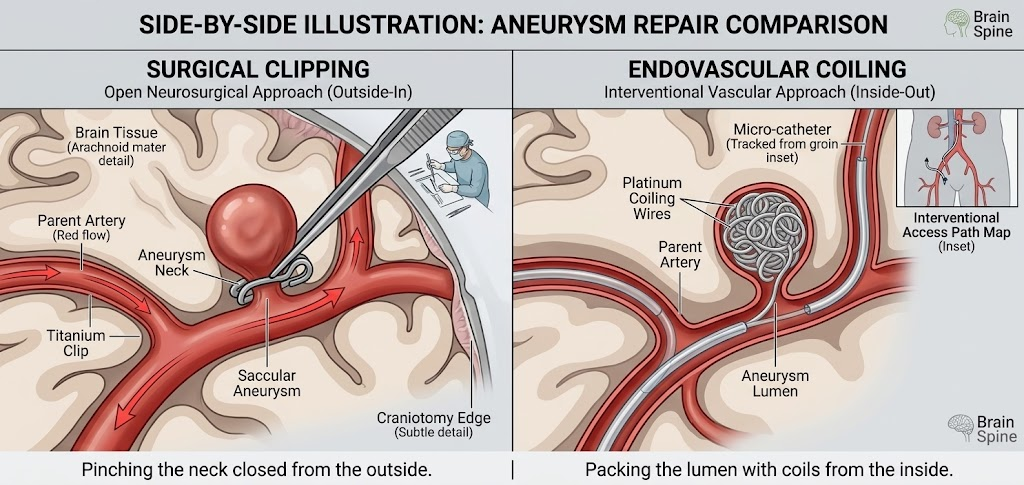
Aneurysm Coiling vs. Clipping: How We Decide Which Is Right for You
When a patient learns they have a brain aneurysm, whether it was found after a sudden severe headache or discovered incidentally on an MRI ordered for something else entirely, the first question is almost always the same: “What do we do about it?” It is a fair question, and the honest answer is that there is no single right treatment for every aneurysm. The decision depends on the aneurysm itself, on whether it has bled, and on the person sitting...
read more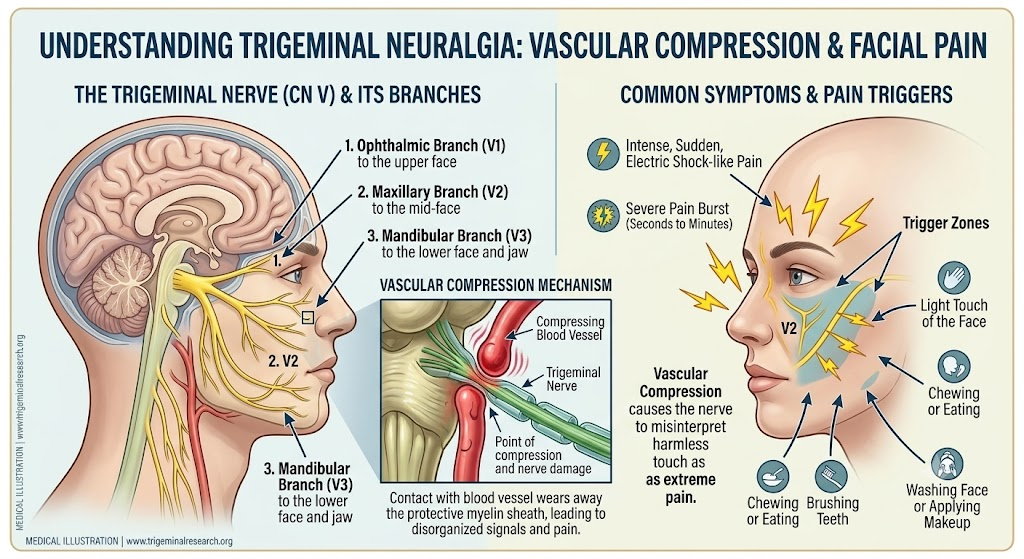
What Causes Trigeminal Neuralgia? Understanding Vascular Compression and Facial Pain
Patients with trigeminal neuralgia often describe something very specific: brief, electric, shock-like pain that comes out of nowhere and is triggered by something as ordinary as brushing teeth, chewing, or a light breeze on the cheek. When I hear that description, the underlying mechanism is usually the same, even before imaging confirms it. This is rarely a dental problem or ordinary facial pain. It's a nerve being irritated at its root, most often by a blood vessel. The Trigeminal Nerve...
read moreMy MRI Shows Lumbar Stenosis: Do I Need Surgery?
One of the most common conversations I have at New Jersey Brain and Spine goes something like this: a patient hands me their MRI report, points to the words lumbar spinal stenosis, and asks, "Does this mean I need surgery?" It's a fair question, and I understand why an imaging report can feel like a verdict. But in spine care, an MRI finding and a surgical indication are not the same thing, and confusing the two leads to a lot...
read more
Cervical Radiculopathy: Mapping Nerve Root Compression to Symptoms
When a patient describes pain, numbness, or weakness following a specific path down the arm, one of the most useful diagnostic tools isn’t imaging. It’s the map itself. Cervical radiculopathy often produces recognizable patterns of pain, numbness, weakness, and reflex change that can help localize the affected nerve root. These patterns are useful clinically, although considerable overlap and individual variation occur. How Nerve Roots Map to Specific Symptoms The cervical spine has seven vertebrae and eight nerve roots, each exiting...
read more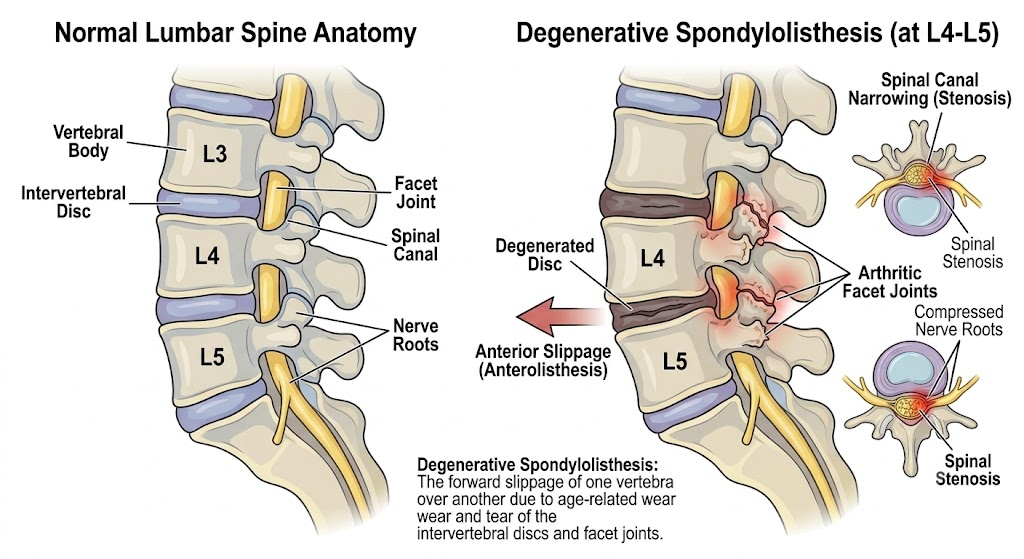
Degenerative Spondylolisthesis and Segmental Instability
Degenerative spondylolisthesis is one of those diagnoses that tends to alarm patients more than the finding itself usually warrants. A vertebra has shifted forward, which sounds significant, but what actually determines the treatment path is whether that segment is stable and whether it’s producing symptoms that match what the patient is experiencing. Many patients are surprised to learn that the amount of slippage is often less important than whether that slippage is stable or still moving. How Degenerative Spondylolisthesis Develops...
read more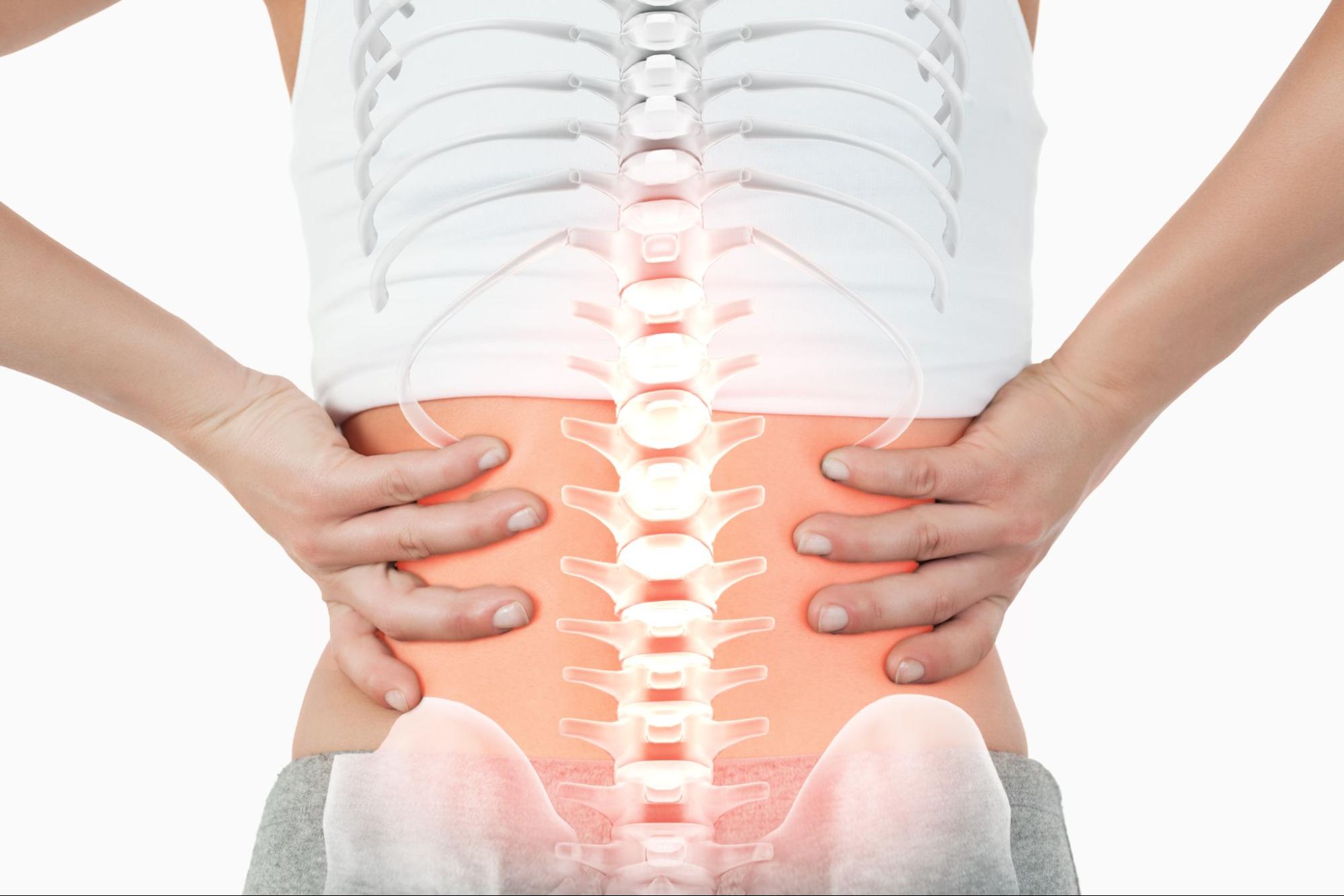
Lumbar Spinal Stenosis and Neurogenic Claudication
One of the most recognizable patterns I see in the office is a patient who can walk comfortably through a grocery store while leaning on a cart, but who develops heavy, aching, or tingling legs within a few minutes of standing upright or walking without support. When that pattern shows up, lumbar spinal stenosis with neurogenic claudication is almost always at the top of the list. What Narrows the Spinal Canal in Lumbar Stenosis The lumbar spinal canal houses the...
read more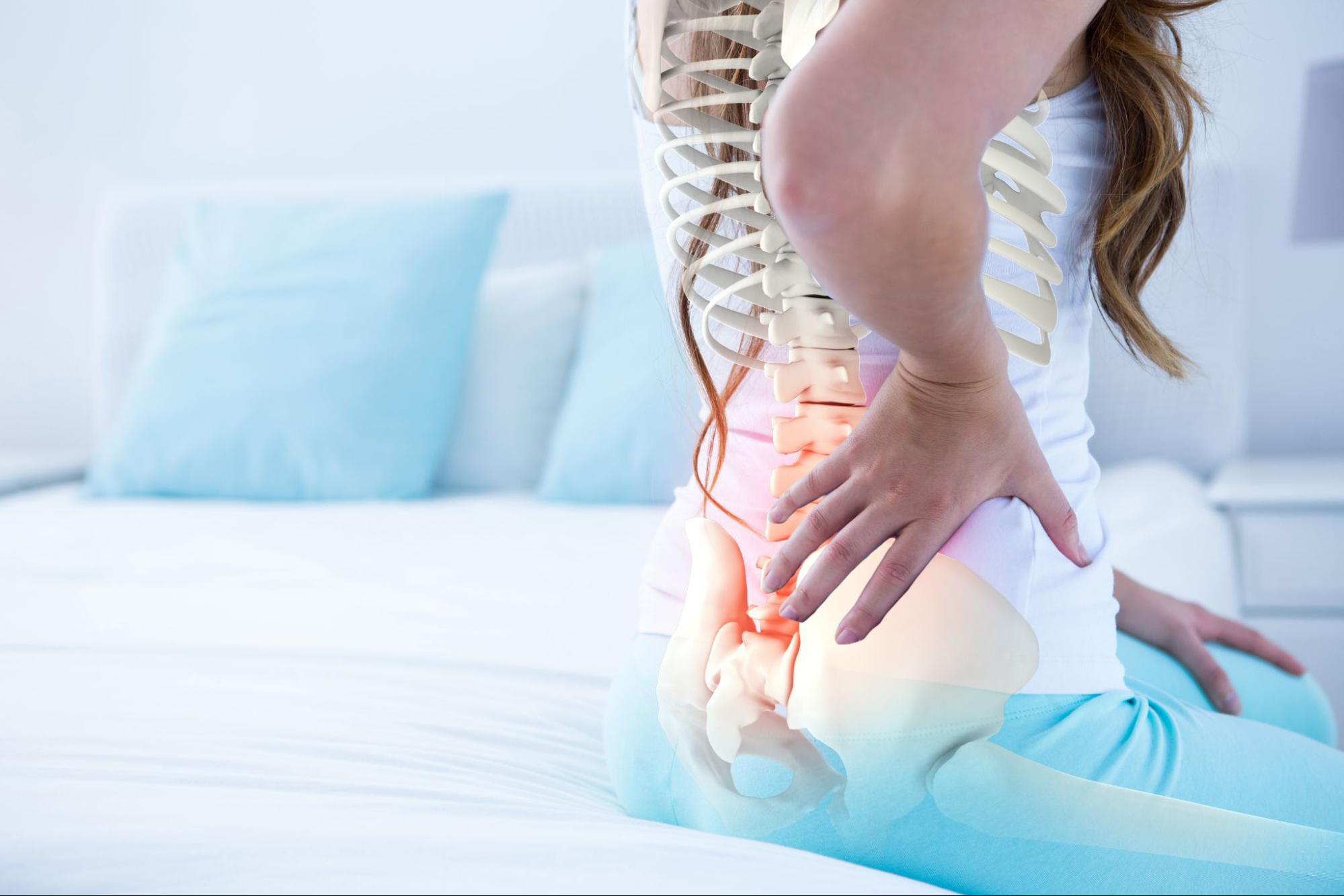
Why Do I Have New SI Joint Pain After Lumbar Fusion?
A common pattern shows up in follow-up visits after a lumbar fusion: a patient’s original back and leg pain is gone, but a new, different pain has developed low in the back or buttock that wasn’t there before. It’s a distinct complaint, often felt more to one side, and it tends to worsen with sitting, standing from a seated position, or rolling over in bed. In many of these patients, the pain generator isn’t the fusion itself. It’s the sacroiliac...
read more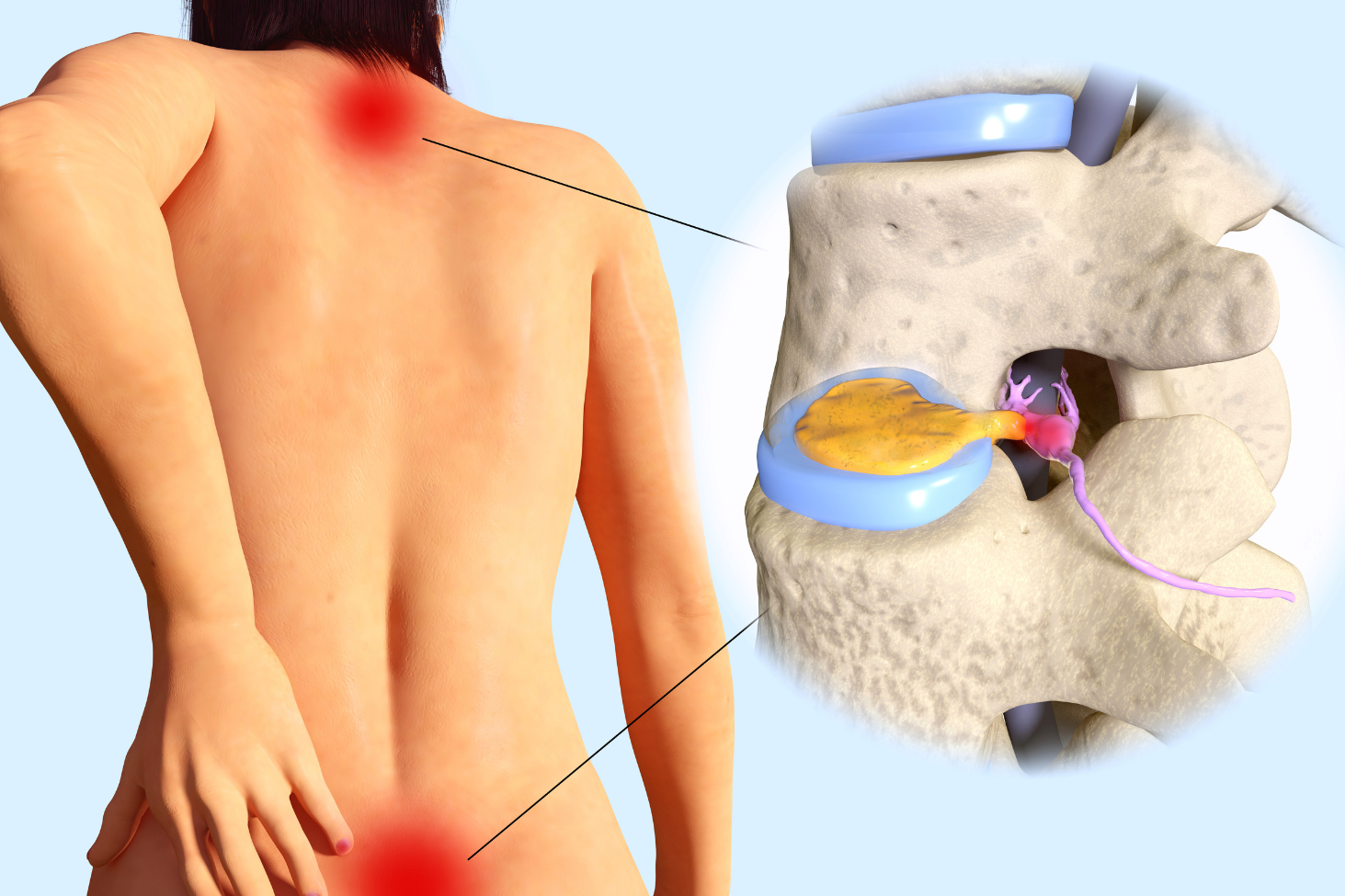
Disc Herniation vs. Bulge: Why the Difference Matters
When patients receive an MRI report that mentions both a disc herniation and a disc bulge, the questions that follow are almost always the same: which one is worse, which one is causing the pain, and what needs to be done about each? These are reasonable questions, and the distinction matters. A disc bulge and a disc herniation are different structural events with different implications for symptoms, prognosis, and treatment decisions. At New Jersey Brain and Spine, we evaluate patients...
read more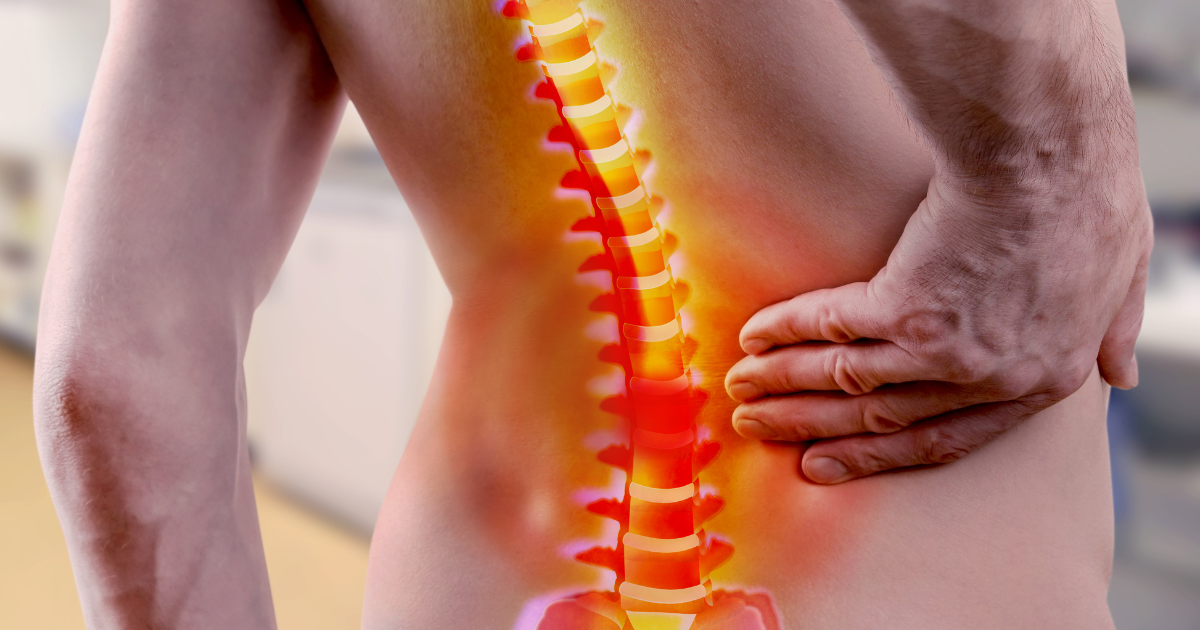
Adjacent Segment Disease After Spinal Fusion
One of the conversations I have regularly with post-fusion patients goes something like this: their fusion worked. Their original leg pain resolved, they got their function back, and life returned to something close to normal. Then, months or years later, a new pain begins. Different location, different character. They come in wondering whether their fusion has failed or whether they are facing something more serious. In many of these cases, what we are looking at is adjacent segment disease, or...
read more