Neurosurgery Second Opinions: Why They Matter and What to Expect

Receiving a clinical recommendation for cranial or spinal surgery is a major milestone in a patient’s healthcare journey. It is entirely expected to experience a period of cognitive overwhelm as you process the implications of a major surgical intervention. During this transition, a critical question frequently arises: Should I seek a second opinion?
For many patients considering brain or spine surgery, seeking a second opinion can provide additional clarity and confidence in the treatment plan. Seeking a second opinion in neurosurgery is not an act of distrust, nor does it signal a difficult patient-provider relationship. Rather, it represents a standard of evidence-based medical care.
At New Jersey Brain and Spine (NJBS), many of the patients we evaluate have already consulted with one or more surgeons before meeting our team. We regularly provide second, third, and even fourth opinions for patients seeking additional clarity around their diagnosis, treatment options, or the need for surgery itself.
We also encourage our own patients to seek additional opinions when facing major surgical decisions. Neurosurgery is an important and highly personal decision, and we believe patients should feel fully informed and confident in their treatment plan before proceeding. Our goal is to provide clear, thoughtful recommendations and help patients understand all appropriate options, whether that ultimately confirms the original recommendation or leads to a different path forward.
Neurosurgery is an intricate subspecialty characterized by rapid technological innovation and nuanced decision-making. Because the central and peripheral nervous systems are complex, a single structural pathology can often be approached through multiple evidence-based strategies. A secondary evaluation offers several distinct medical advantages:
Different surgeons may recommend different treatment strategies based on their training, experience, and interpretation of the clinical findings. In some situations, multiple treatment approaches may be reasonable. A second opinion can help patients better understand the advantages, limitations, and expected outcomes of each option before making a decision.
Pinpointing the precise etiology of neurological deficits is a complex diagnostic task. This is particularly true in degenerative spinal conditions, where referred pain pathways can mimic other pathologies, and multi-level structural degeneration can obscure the true source of pain. A comprehensive second opinion ensures that the specific anatomical lesion identified on a scan correlates precisely with your objective physical symptoms and dermatomal mapping.
The highest tier of neurosurgical acumen is often demonstrated by knowing when not to operate. At NJBS, our clinical framework is anchored in a conservative-first philosophy. A secondary review by our team frequently reveals that a structural abnormality can be successfully managed without an operative intervention. Instead, care may be optimized through structured, subspecialized physical therapy, lifestyle modification, or target-specific interventional pain management protocols.
Even when an independent secondary evaluation completely validates the initial specialist’s surgical recommendation, the consultation remains clinically valuable. Objective confirmation lowers patient anxiety and down-regulates central nervous system stress pathways. Entering a planned procedure with cognitive clarity and a complete understanding of the biomechanical objectives has been shown to support an organized perioperative recovery.
During a second opinion consultation, our neurosurgeons review more than just imaging studies. We evaluate the complete clinical picture, including your symptoms, neurological examination findings, prior treatments, and overall goals.
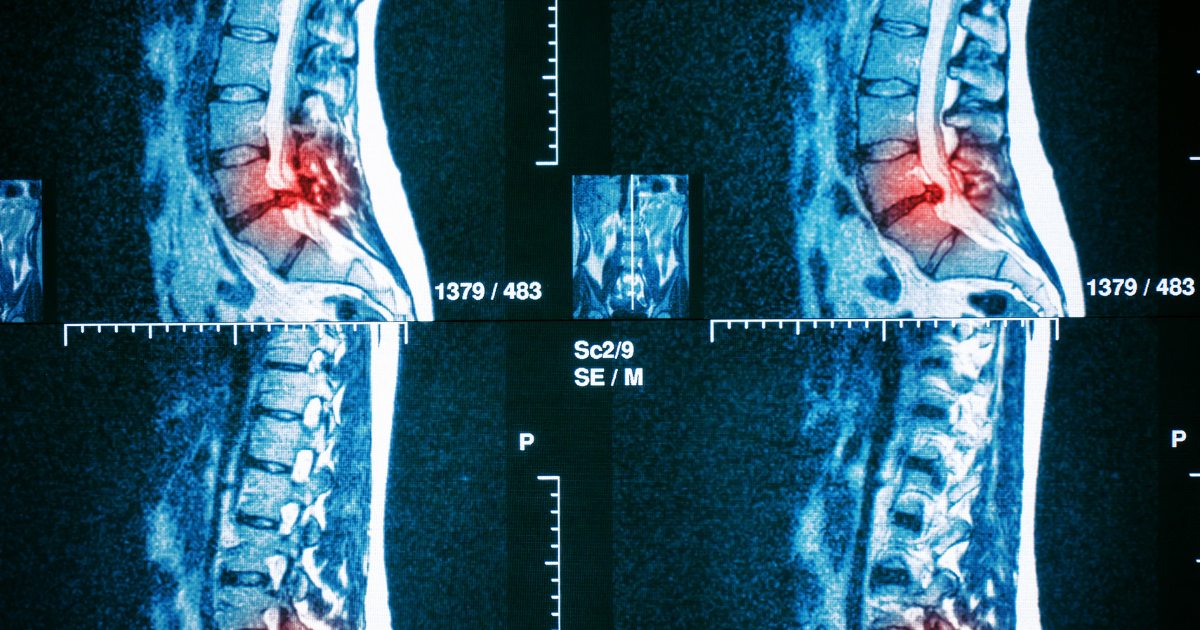
In many cases, we independently review MRI, CT, and X-ray imaging rather than relying solely on the radiology report. This allows us to determine whether imaging findings truly correlate with your symptoms and whether surgery is necessary, appropriate, or potentially avoidable.
Patients should expect an open discussion of both surgical and non-surgical treatment options, along with ample opportunity to ask questions and understand the reasoning behind each recommendation.
A foundational challenge in modern neurosurgery is managing patient interpretations of radiology reports. At NJBS, our clinicians frequently consult with patients who are distressed by advanced terminology on an MRI or CT report, such as severe canal stenosis, multi-level disc herniations, or osteophytic bridging.
It is a well-documented clinical reality that structural abnormalities are highly prevalent on imaging scans of completely asymptomatic individuals. This means that a severe-looking disc bulge on an MRI may have absolutely no correlation to a patient’s active physical symptoms, and thus, requires zero surgical treatment. An expert NJBS neurosurgeon treats the physical, functional deficits of the human patient, not the static grey-scale images on a filmsheet.
Yes. The vast majority of private commercial insurance payers, as well as Medicare, provide explicit coverage for secondary consultations regarding elective, non-emergency major surgical recommendations. In select clinical scenarios, insurance providers mandate an independent second opinion before granting pre-authorization for a spinal or cranial procedure. We recommend contacting your member services representative to confirm specific regional network rules.
You must provide your physical raw imaging discs (or authenticated digital access links) containing the full MRI, CT, or X-ray data sets. Written radiology reports are insufficient, as NJBS neurosurgeons prefer to review the actual imaging studies themselves to understand how the findings relate to your symptoms and neurological examination. Additionally, provide recent clinical notes, any previous conservative treatment logs (such as physical therapy discharge summaries), and an accurate list of current medications.
If two specialists provide different recommendations, ask each physician to explain the reasoning behind their approach and what alternatives were considered. In many cases, differences in treatment recommendations reflect varying philosophies, training backgrounds, or interpretations of the imaging rather than a clear right or wrong answer. If the recommendations are substantially different and you remain uncertain, seeking a third independent opinion can help provide additional clarity and confidence in your decision.
Yes. It is common for a secondary review by a motion-preservation or conservative-focused specialist to determine that an operative intervention can be safely deferred. If a patient’s neurological exam remains stable and their pain can be managed via targeted interventional pain modalities or specialized physical therapy, non-operative management remains the preferred medical path.
NJBS prioritizes second opinion consultations for patients with potentially urgent neurological conditions, including progressive weakness, myelopathy, or other concerning neurological symptoms. In many cases, these patients can be evaluated within days and sometimes even the same or next business day.
If you already have surgery scheduled elsewhere and would like a second opinion before making a final decision, it is important to communicate that to our scheduling team when you call. This helps us prioritize your appointment and ensure you have adequate time to review all available treatment options before proceeding with surgery.
NJBS serves patients across northern New Jersey and the greater tri-state area, with offices in Paramus, Hackensack, Montclair, Montvale, Annandale, and Englewood. No referral is required to schedule a consultation.