Understanding Brain Tumors: When Is Surgery Necessary?
When a patient receives the news that an MRI has identified something on their brain, the conversation that follows is one of the most important we have as neurosurgeons. The word “tumor” carries enormous weight, and most people arrive at that appointment having spent days imagining outcomes that often do not reflect what the imaging actually shows. One of the first things we try to do is separate what the scan has found from what it means clinically, and to explain clearly why those two things are not the same.
Not all brain tumors are the same, not all require surgery, and for many patients, the most appropriate initial approach is careful monitoring rather than immediate intervention. At New Jersey Brain and Spine, we treat the full spectrum of brain tumor presentations, from incidental findings that require nothing more than surveillance to aggressive tumors that warrant urgent surgical planning. Understanding where a diagnosis falls on that spectrum is the foundation of every treatment conversation we have.
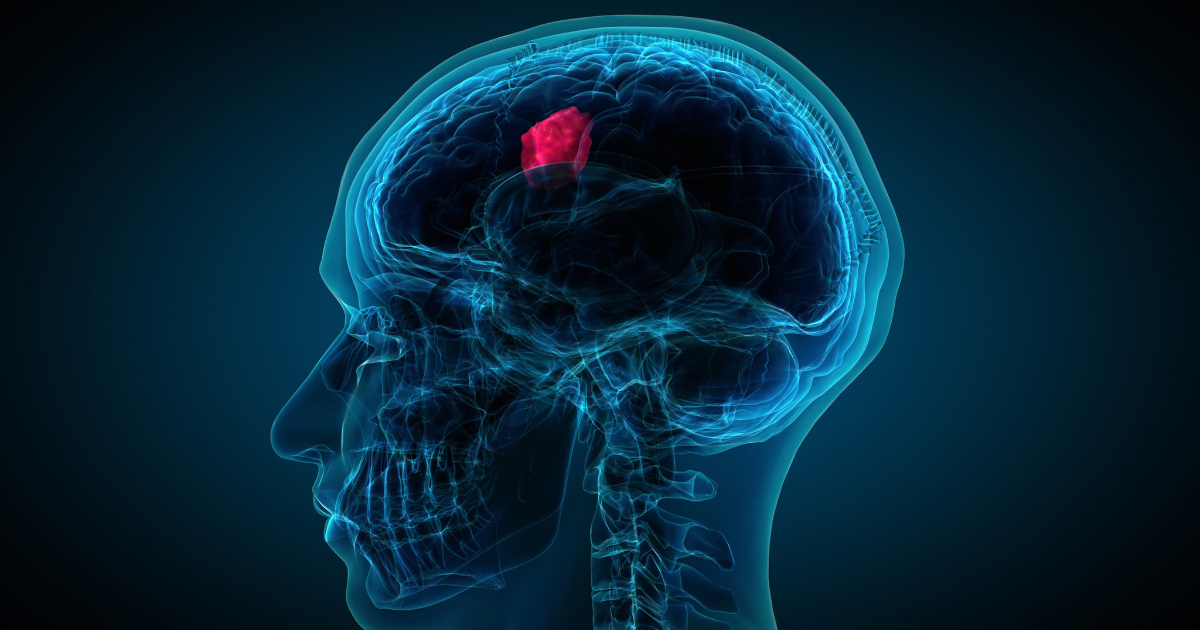
The term “brain tumor” refers to any abnormal growth of cells within the brain or its surrounding structures. The skull is a closed, rigid space that contains brain tissue, cerebrospinal fluid (the clear fluid that cushions the brain and spinal cord), and blood vessels. When a tumor grows within this enclosed space, it can compress surrounding brain tissue, disrupt normal nerve signaling, or block the flow of cerebrospinal fluid, leading to a buildup of pressure called hydrocephalus.
Brain tumors are broadly divided into two major categories. Primary brain tumors originate from cells within the brain itself or its surrounding structures. These include tumors arising from glial cells (the support cells of the brain), the meninges (the protective membranes covering the brain), nerve sheaths, and the pituitary gland, among others. Metastatic brain tumors originate from cancer elsewhere in the body, most commonly the lung, breast, colon, kidney, or skin (melanoma), and spread to the brain through the bloodstream. Metastatic tumors are actually more common than primary brain tumors in adults.
Within primary brain tumors, grading matters enormously. The World Health Organization grades brain tumors on a scale from grade 1 (typically slow-growing, well-defined, and often curable with surgery) to grade 4 (rapidly growing, invasive, and aggressive). A meningioma, for example, is most often a grade 1 tumor that grows slowly along the brain’s outer lining and may never require treatment. A glioblastoma, by contrast, is a grade 4 tumor that demands prompt and aggressive management.
The grade of a tumor, its location, its relationship to critical brain structures, and the patient’s overall neurological status together determine the urgency and nature of the treatment response.
Surgery for a brain tumor serves several potential purposes: it can remove the tumor entirely (in cases where that is anatomically achievable), reduce the tumor volume to relieve pressure on surrounding brain tissue, obtain tissue for a definitive pathological diagnosis, or address complications such as hydrocephalus. Not all of these goals apply to every patient.
For benign, slow-growing tumors that are found incidentally and are not producing symptoms, the risks of surgery may outweigh the benefit of removal. A small, asymptomatic meningioma in a patient in their 70s, for instance, may be best managed with periodic MRI surveillance. If it remains stable in size and produces no symptoms over years of monitoring, no intervention may ever be needed.
For tumors that are producing symptoms through compression, rapid growth, or edema, surgery is typically part of the treatment plan. The goal may be maximal safe resection, meaning the removal of as much tumor as possible without causing new neurological deficits. In some locations, particularly near eloquent cortex (the brain regions that control speech, movement, or vision), this requires careful surgical planning including intraoperative brain mapping in select cases.
At NJBS, surgical decision-making for brain tumors involves a multidisciplinary discussion. Neurosurgery, neuro-oncology, radiation oncology, and neuroradiology all contribute to the treatment plan. We do not make these decisions in isolation, and we do not make them quickly without adequate information. A patient who comes to us with a new brain tumor diagnosis will receive a thorough evaluation before any operative intervention is recommended.
This patient was referred after a brain MRI performed for unrelated headaches identified a small, well-circumscribed mass along the right frontal convexity. The radiologist described it as most consistent with a meningioma measuring 1.8 cm.
She had no neurological symptoms. Her examination was entirely normal. The mass showed no surrounding edema and was not in proximity to eloquent cortex or major venous structures.
Her neurosurgical evaluation confirmed the likely diagnosis of a benign meningioma. Given its small size, lack of symptoms, and favorable location, the team recommended a surveillance approach with repeat MRI at 6 months and then annually. She was counseled on what symptoms to watch for that would indicate growth or pressure effects. No surgery was recommended at that time, and she found significant reassurance in having a clear monitoring plan.
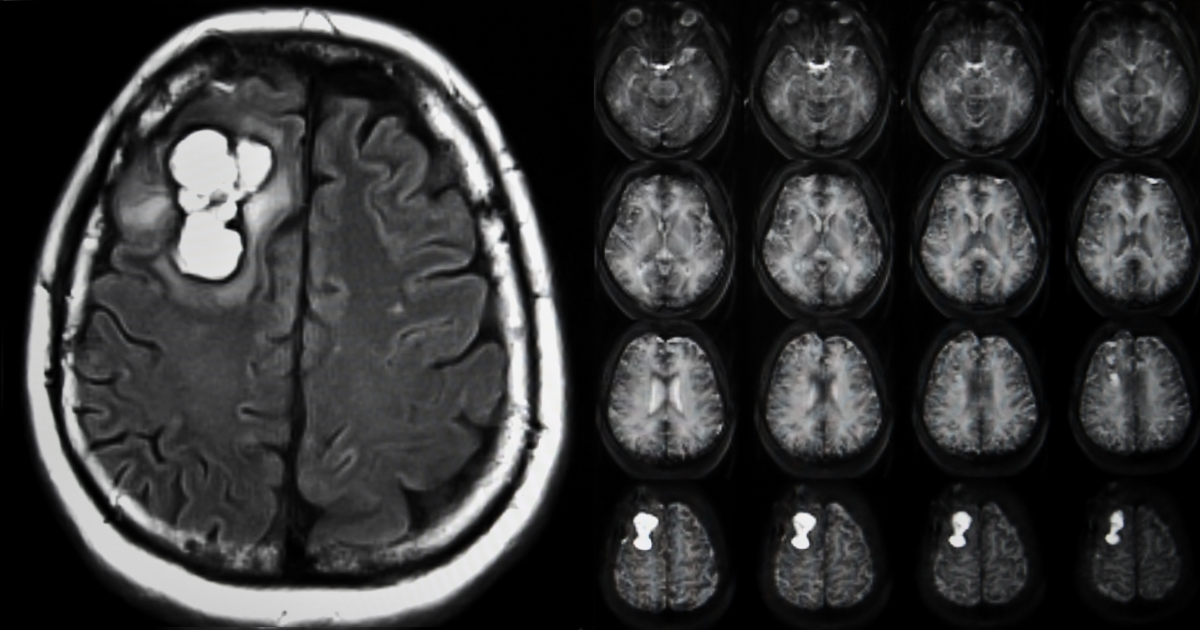
This patient presented with three weeks of progressive right-hand weakness and word-finding difficulty. Brain MRI showed a large, heterogeneously enhancing mass in the left frontal lobe with surrounding edema and midline shift. The imaging characteristics were concerning for a high-grade glioma.
His neurological deficits were progressing and his functional status was declining. Urgent neurosurgical evaluation was initiated. Given the mass effect and rapidly evolving symptoms, maximal safe surgical resection was recommended to obtain a tissue diagnosis, relieve intracranial pressure, and reduce tumor volume prior to adjuvant treatment. He underwent surgery and pathology confirmed glioblastoma. He was subsequently enrolled in a chemoradiation protocol with neuro-oncology.
Note: These patient scenarios are representative, hypothetical examples used for illustrative purposes. Because every brain tumor and medical history is unique, actual treatment recommendations depend entirely on your individual circumstances and a thorough evaluation by your care team.
New or unexplained neurological symptoms should always prompt medical evaluation. This includes new-onset seizures in a patient with no prior seizure history, progressive headaches that are different in character from prior headaches, new weakness or numbness in the face, arm, or leg, new speech or language difficulty, unexplained changes in vision, and changes in personality, memory, or cognition that are progressive rather than episodic.
These symptoms do not necessarily mean a tumor is present, but they warrant prompt evaluation with a neurological examination and, in most cases, brain imaging. New Jersey patients who are concerned about neurological symptoms or who have received a brain tumor diagnosis and are seeking a second opinion are welcome at NJBS for evaluation and consultation.
Call 911 or go to the nearest emergency room immediately if you experience a sudden severe headache that is the worst of your life, a new seizure, rapid loss of consciousness, sudden profound weakness or speech loss, or acute vision loss. These can represent neurological emergencies including intracranial hemorrhage, herniation, or acute hydrocephalus requiring immediate intervention.
No. The treatment approach for a brain tumor depends on the type of tumor, its size and location, whether it is producing symptoms, and the patient’s overall health. Slow-growing benign tumors that are found incidentally and are not causing symptoms are often managed with surveillance imaging rather than immediate surgery. Surgery is recommended when the tumor is causing or is likely to cause neurological deficits, when tissue is needed for a definitive diagnosis, or when the tumor’s size or location creates meaningful risk of rapid deterioration.
Benign brain tumors are typically slow-growing, have clearer boundaries, and are less likely to invade surrounding tissue. They are often curable with surgery alone. Malignant brain tumors grow more rapidly, tend to infiltrate normal brain tissue, and are more difficult to remove completely. However, even benign tumors can cause serious neurological problems depending on their location, so the term “benign” does not mean harmless in the context of the brain.
Imaging, typically MRI with and without contrast, provides the initial characterization of a brain tumor, but a definitive tissue diagnosis requires a biopsy or surgical resection with pathological analysis. In some cases, the imaging characteristics are sufficiently specific that a presumptive diagnosis can guide initial management, but most treatment decisions, particularly for higher-grade lesions, require histopathological confirmation.
For low-grade, asymptomatic tumors, a surveillance approach may be entirely appropriate. For symptomatic or high-grade tumors, declining surgery may limit treatment options and allow the tumor to progress, but patients retain the right to make informed decisions about their care. At NJBS, we provide thorough counseling on the expected natural history of a tumor, the risks and benefits of surgery, and the available alternatives, so that patients can make decisions aligned with their values and circumstances.
This depends largely on the tumor type and grade. Some benign tumors, such as certain meningiomas, can recur and require repeat treatment. High-grade gliomas almost always recur despite surgery, radiation, and chemotherapy, though the interval and pattern of recurrence vary. Regular post-treatment imaging surveillance is a standard part of follow-up care for brain tumor patients at NJBS.
NJBS serves patients across northern New Jersey and the greater tri-state area, with offices in Paramus, Hackensack, Montclair, Montvale, Annandale, and Englewood. No referral is required to schedule a consultation.