Orthopedic Spine Surgeon vs. Neurosurgeon: Who Should Perform Your Back Surgery?
When back or neck symptoms persist despite conservative treatment, patients are often faced with an important question: Should they see an orthopedic spine surgeon or a neurosurgeon? Understanding the differences between these specialties can help patients make informed decisions about their care.
In modern medicine, the structural and functional complexities of the spine have created a significant overlap between these two medical subspecialties. Both types of specialists are capable of performing standard spinal procedures. However, their foundational residencies reflect distinct clinical philosophies and training pathways.
At New Jersey Brain and Spine (NJBS), our board-certified neurosurgeons bring extensive training in both spine surgery and the nervous system, allowing them to evaluate spinal conditions from both a structural and neurological perspective.
Over the past several decades, spine surgery has evolved into its own distinct, highly specialized field of medicine. Consequently, for the vast majority of standard degenerative spinal conditions, the training pathways of orthopedic surgeons and neurosurgeons converge after residency.
Top-tier experts in both fields pursue a post-residency spine surgery fellowship. This additional one- to two-year period of hyper-focused clinical training standardizes their approach to conventional spinal operations. Because of this shared fellowship training, a dedicated orthopedic spine surgeon and a neurosurgeon are both technically equipped to manage common structural pathologies, including:
While both specialties often pursue advanced spine fellowships, their training pathways differ significantly. Neurosurgeons complete a seven-year residency focused on the brain, spine, spinal cord, and peripheral nerves, with spine surgery comprising a substantial portion of their operative experience. Orthopedic surgeons complete a five-year residency focused on the musculoskeletal system as a whole before pursuing additional fellowship training to specialize in spine surgery. As a result, both specialists may ultimately perform many of the same procedures, but they arrive there through different foundational training experiences.
While fellowship training creates significant overlap between the specialties, their residency training shapes how they approach spinal disorders and surgical decision-making.
Orthopedic surgeons complete a residency dedicated entirely to the human musculoskeletal system. They are trained to manage diseases, injuries, and deformities of the bones, joints, muscles, ligaments, and tendons throughout the entire body.
Neurosurgeons complete a rigorous, typically seven-year residency focused exclusively on the central, peripheral, and autonomic nervous systems. Their daily scope of practice revolves around the brain, the spinal cord, and the delicate nerve roots that exit the neural foramen.
A critical legal and medical boundary exists between these two specialties regarding the dura mater, the outermost, protective membrane that encases the spinal cord and cerebrospinal fluid.
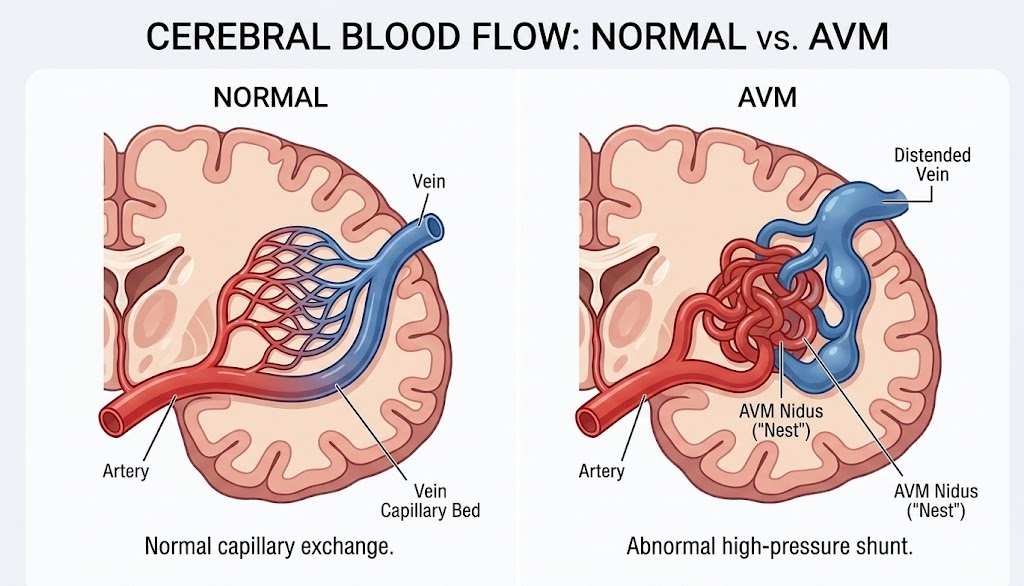
Orthopedic spine surgeons are strictly restricted to the extradural space (outside the protective lining of the spinal cord). Only board-certified neurosurgeons are trained, credentialed, and legally permitted to operate inside the dura mater. Therefore, if a spinal pathology involves a tumor within the spinal cord (such as an ependymoma or astrocytoma), an intradural benign tumor (like a meningioma or schwannoma), a vascular malformation (AVM), or a tethered spinal cord, a neurosurgeon is medically required to perform the procedure.
At NJBS, our neurosurgeons approach spine care with an understanding that back and leg symptoms are rarely just bone problems; they are nerve problems caused by structural changes. Because radicular pain, paresthesia, and motor deficits stem directly from neural irritation, the microscopic precision inherent to neurosurgery is aligned with modern spine care.
Choosing a neurosurgeon at NJBS offers several distinct procedural advantages:
When selecting a spine specialist in North Jersey, the foundational specialty listed on a physician’s credentialing profile is only one component of the decision-making process. Patients should look for specific indicators of subspecialty expertise and practice volume:
The Clinical Reality of Imaging Findings: At NJBS, our clinicians often encounter patients who are distressed by complex descriptions on an MRI report. It is a common clinical reality that many notable imaging findings — such as multi-level disc bulges or degenerative joint disease — do not correlate to active symptoms and require no surgical treatment whatsoever. An expert neurosurgeon on our team treats the patient’s physical functional deficits and dermatomal pain pathways, not the static images on a scan.
No. Modern neurosurgeons dedicate a significant portion of their clinical practice to the spine. Because the spinal cord and its exiting nerve roots are major components of the central and peripheral nervous systems, spine surgery falls within the core residency training and continuous scope of practice of a neurosurgeon.
The baseline recovery timeline is dictated by the specific anatomical procedure (e.g., a single-level microdiscectomy versus a multi-level instrumented fusion) and the patient’s overall health, rather than the surgeon’s base specialty. However, because our neurosurgeons consistently employ advanced micro-endoscopic and minimally invasive techniques, their patients frequently experience reduced soft-tissue disruption, which can lead to a more efficient immediate recovery.
For a standard lumbar disc herniation requiring a microdiscectomy, both a fellowship-trained orthopedic spine surgeon and a neurosurgeon are technically capable. Many patients select an NJBS neurosurgeon due to their extensive foundational experience manipulating delicate neural elements under high-powered magnification, ensuring maximum protection of the compromised nerve root.
No. Orthopedic surgeons are restricted from opening the dura mater, the protective membrane enclosing the spinal cord. Any spinal pathology located within the intradural space — such as primary spinal cord tumors, meningiomas, cysts, or vascular abnormalities — must be treated exclusively by a board-certified neurosurgeon.
The vast majority of neurosurgeons at New Jersey Brain and Spine are board-certified by the American Board of Neurological Surgery (ABNS) or the American Board of Osteopathic Surgery (AOA). Because full board certification requires a specific number of years in active clinical practice here in the U.S., our highly skilled newer physicians are “board-eligible” while they complete this standard multi-year credentialing process.
Furthermore, the majority of our specialists have completed prestigious, post-residency fellowship training dedicated specifically to their areas of subspecialization, such as advanced spine surgery. We believe in total transparency, which is why you can easily review each physician’s complete educational background, fellowship training, and board status directly on our website’s team profile pages.
NJBS serves patients across northern New Jersey and the greater tri-state area, with offices in Paramus, Hackensack, Montclair, Montvale, Annandale, and Englewood. No referral is required to schedule a consultation.