Sciatica vs. Herniated Disc: How to Tell the Difference and When to See a North Jersey Specialist
If you have ever experienced a sudden, sharp pain originating in your lower back and radiating down your leg, you understand how quickly spinal pathologies can impair daily function. When patients research these symptoms, two terms are frequently used interchangeably: sciatica and a herniated disc.
From a clinical standpoint, however, they represent entirely different medical concepts. One is a structural condition, while the other is a group of symptoms caused by nerve irritation. Understanding this distinction is vital for determining the appropriate diagnostic pathway, managing patient expectations, and establishing an effective, conservative-first treatment plan.
At New Jersey Brain and Spine (NJBS), our subspecialty-trained neurosurgeons and spine experts emphasize patient education as the first step in clinical care. Here is an objective look at the anatomical relationship between these two terms, how our clinicians evaluate them, and when a structural issue transitions from a manageable discomfort to a condition requiring specialist intervention.
To understand why back and leg pain occur, it is necessary to examine the mechanical and neurological architecture of the lumbar spine. The spinal column relies on a series of intervertebral discs that act as shock absorbers between the bony vertebrae, protecting the central nervous system and exiting nerve roots.
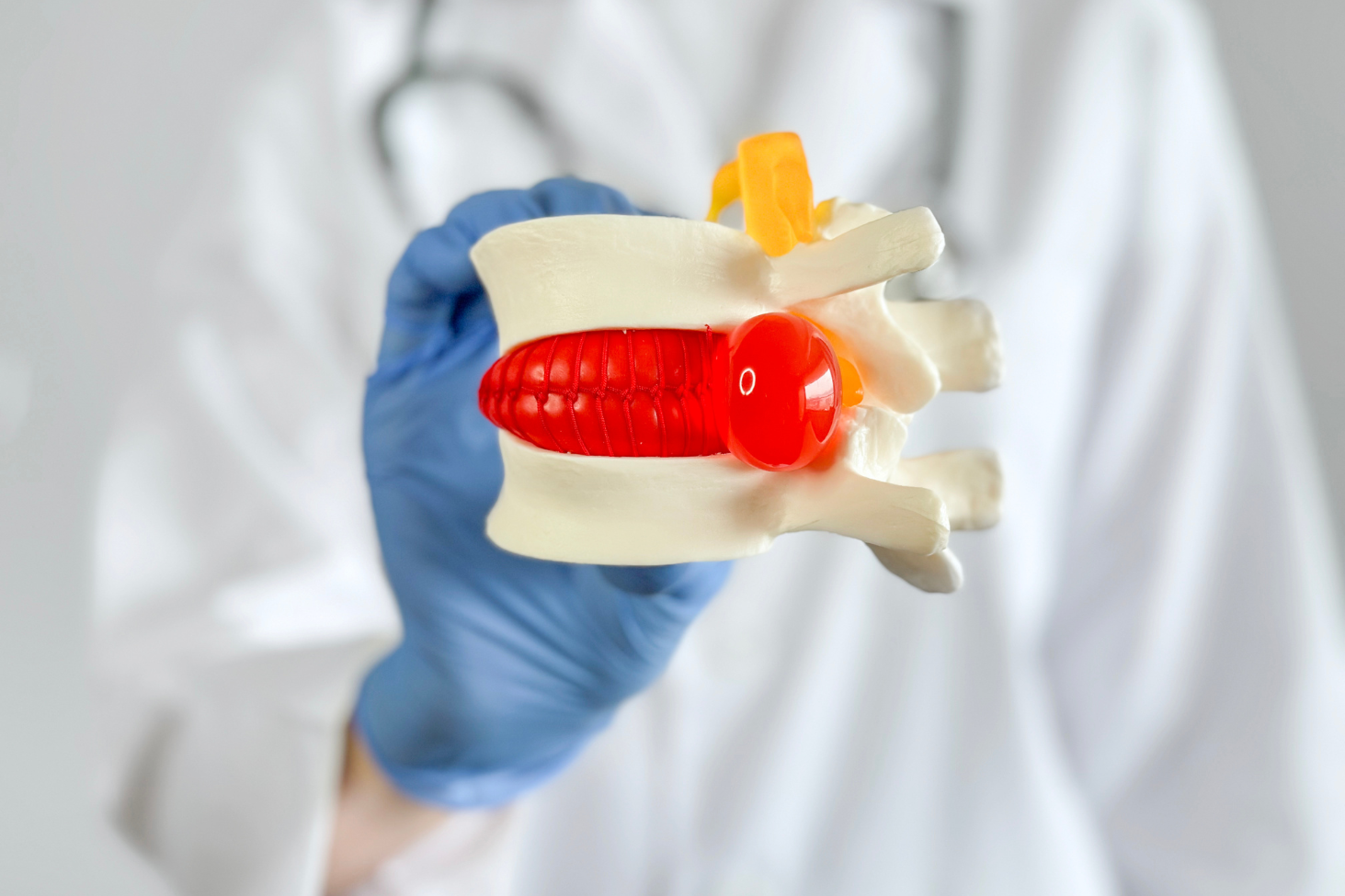
An intervertebral disc comprises a tough, fibrous outer ring, the annulus fibrosus, and a soft, gelatinous core known as the nucleus pulposus. A lumbar disc herniation occurs when a structural compromise or tear develops in the annulus fibrosus, allowing the nucleus pulposus to displace or protrude outward.
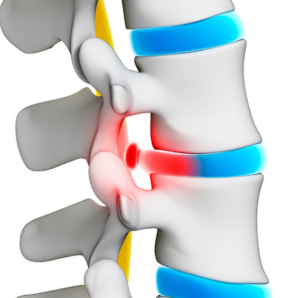
On its own, a herniated disc may cause localized axial back pain due to mechanical strain or localized chemical inflammation. However, significant clinical symptoms typically arise only when the displaced disc material mechanically compresses or chemically irritates an adjacent spinal nerve root.
Unlike a herniated disc, sciatica is not an independent medical diagnosis. Rather, it is a clinical term used to describe radiculopathy — a set of symptoms resulting from the compression, traction, or irritation of the sciatic nerve or the nerve roots (L4 through S3) that coalesce to form it.
The sciatic nerve is the largest single nerve in the human body, originating in the lower lumbar spine and traveling through the pelvis, buttocks, and down the posterior aspect of each leg. When a pathology compromises this pathway, it generates radiating symptoms along the nerve’s distribution.
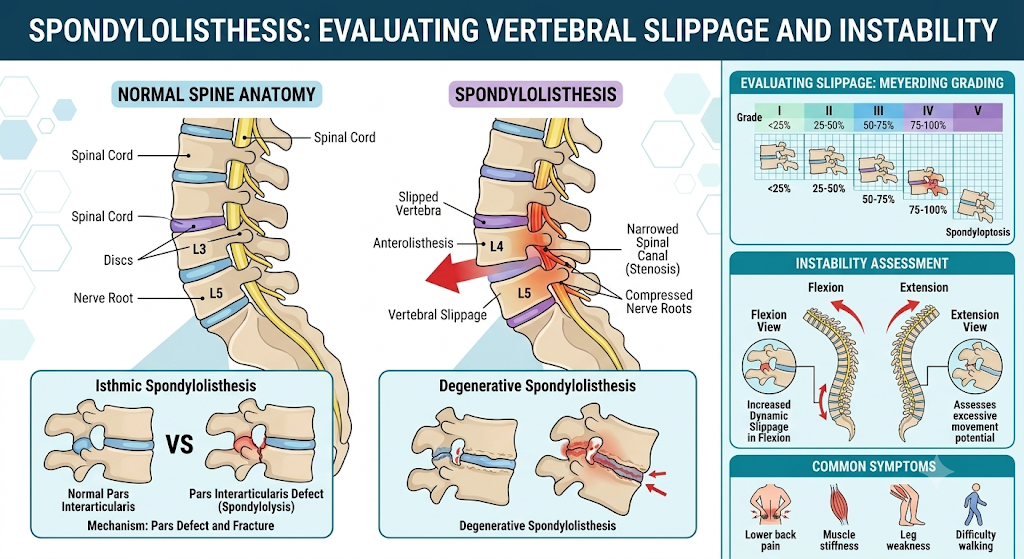
The Clinical Relationship: A herniated disc is a structural cause; sciatica is the symptomatic effect. While a lumbar disc herniation is statistically the most common cause of sciatica, the symptoms of sciatica can also be driven by other pathologies, such as lumbar spinal stenosis, foraminal narrowing from bone spurs, or localized muscular compression.
Because a herniated disc so frequently serves as the underlying catalyst for sciatica, distinguishing between the structural injury and the resulting nerve irritation requires a precise evaluation of the patient’s presentation.
Here is a quick glance at how they compare:
| Herniated Disc | Sciatica | |
|---|---|---|
| What is it? | Structural problem | Symptom pattern |
| Typical pain | Back pain | Leg pain |
| Causes | Disc injury | Nerve irritation |
| Requires surgery? | Sometimes | Not by itself |
Spatial Distribution of Pain: An isolated herniated disc typically presents as localized, deep axial pain centered in the lumbar region, often accompanied by protective muscle guarding or spasms. Sciatica presents as radicular pain, tracing a linear path out of the back, through the gluteal region, and down the thigh, calf, and occasionally into the foot.
Character of Sensation: Axial pain from a herniated disc is often described as a dull, mechanical ache or stiffness that exacerbates with lumbar flexion (bending forward) or increased intra-abdominal pressure (coughing or sneezing). Sciatica pain is distinctly neurogenic, characterized by burning, searing sensations, or electric-shock-like jolts down the leg.
Neurological Deficits: A localized disc herniation without nerve root impingement rarely causes distal neurological alterations. Sciatica, by definition involving nerve pathway compromise, frequently introduces paresthesia (“pins and needles”), objective numbness in specific dermatomal distributions, or lower extremity motor weakness.
Lateralization: Mechanical back pain from a herniated disc can present bilaterally or centrally across the lower back. Conversely, acute sciatica almost exclusively affects a single side of the body, corresponding directly to the specific side of the unilateral nerve root compression.
A foundational pillar of the NJBS philosophy is that the human spine possesses a remarkable capacity for self-resolution. Up to 90% of patients experiencing an acute lumbar disc herniation or radicular sciatica notice significant symptomatic improvement within 4 to 6 weeks through natural healing and non-operative interventions.
Over time, the displaced nucleus pulposus material can undergo a physiological process known as spontaneous resorption, where the body’s natural immune response breaks down and fragments the herniated tissue, alleviating pressure on the nerve root.
If symptoms are mild to moderate and do not involve progressive neurological decline, initial home management should focus on optimizing this recovery environment:
One of the most common patient misconceptions in spine care is that a notable abnormality on an MRI automatically correlates with the severity of their pain or mandates surgery.
In clinical practice, radiological findings must always be secondary to the patient’s physical and neurological examination. Extensive medical literature shows that a high percentage of completely asymptomatic individuals possess lumbar disc herniations or bulges on routine imaging that require absolutely no clinical intervention.
Patient A: A 44-year-old presenting with severe, localized lower back pain after lifting a heavy object. An MRI reveals a prominent L4-L5 disc herniation. However, the physical examination shows full motor strength, normal reflexes, and no radicular leg pain. Because there is no nerve root compromise matching the scan, Patient A does not require surgery and is successfully managed through a structured, conservative physical therapy program focused on core stabilization.
Patient B: A 52-year-old presenting with mild back pain but significant weakness in their right foot, causing them to trip while walking (foot drop). An MRI reveals a small, seemingly minor L4-L5 disc fragment that is directly compressing the exiting nerve root. Despite the smaller appearance on imaging, the presence of an objective motor deficit makes Patient B a clear candidate for an expedited clinical intervention, potentially including a minimally invasive microdiscectomy to preserve nerve function.
Note: These patient scenarios are representative, hypothetical examples used for illustrative purposes. Actual treatment recommendations depend entirely on individual health circumstances and a thorough evaluation by your care team.
While conservative care is the default pathway, certain clinical milestones and warning signs indicate that self-management should be replaced by a comprehensive medical evaluation. Patients across Northern New Jersey have access to top-tier, subspecialized neurosurgical expertise right in their community at NJBS.
You should seek a formal specialist evaluation if you experience any of the following:
If your symptoms fail to improve or progressively worsen after 4 to 6 weeks of dedicated conservative management, a specialist evaluation is required. At this stage, advanced diagnostic imaging (MRI) is utilized to map the precise structural mechanics of the spine and guide targeted interventions, such as epidural steroid injections (ESIs).
The onset of physical weakness — such as an inability to stand on your tiptoes, a buckling knee, or difficulty lifting the front of your foot (foot drop) — indicates that nerve root compression is compromising motor fibers. This requires timely evaluation by an NJBS neurosurgeon to prevent long-term neuromuscular damage.
When neurogenic pain remains severe enough to disrupt sleep architecture, prevent occupational duties, or severely limit basic mobility despite pharmacological management, advanced interventional care is warranted to restore quality of life.
If you experience a sudden onset of progressive bilateral leg weakness, numbness in the perineal or groin region (“saddle anesthesia”), or a loss of bowel or bladder control (including acute urinary retention), you must seek immediate emergency medical evaluation. These symptoms are indicative of Cauda Equina Syndrome, a rare condition involving severe compression of the lumbosacral nerve roots that requires urgent surgical decompression to prevent permanent neurological paralysis.
Yes. The majority of lumbar disc herniations decrease in size over time. In many cases, the body gradually reabsorbs portions of the herniated disc, which can relieve pressure on the affected nerve and improve symptoms. This is one reason many patients improve with conservative treatment and do not require surgery.
In the acute phase, reducing the localized inflammatory response is paramount. This is achieved through short-term activity modification, the scheduled use of anti-inflammatory medications (NSAIDs), and localized cryotherapy over the lumbar spine where the nerve roots originate, rather than where the pain is felt in the leg.
Our clinicians utilize a combination of detailed patient history, comprehensive neurological testing (including the straight-leg raise test to assess dural tension), and advanced neuroimaging. If diagnostic ambiguity remains, selective nerve root blocks (SNRBs) may be utilized to confirm the exact symptomatic level prior to formulating a definitive care plan.
No. At New Jersey Brain and Spine, our neurosurgeons operate under a conservative-first philosophy. The vast majority of our patients are successfully managed using non-operative modalities, including specialized physical therapy, lifestyle modifications, and interventional pain medicine. Surgery is reserved strictly for cases involving progressive neurological compromise or unmanageable pain that is refractory to comprehensive conservative care.
New Jersey Brain and Spine maintains clinical offices throughout the region, including Paramus, Hackensack, Montclair, Montvale, Annandale, and Englewood. This regional framework ensures that patients have direct access to highly specialized neurosurgical consultations, diagnostic reviews, and multi-disciplinary spine care close to home.
NJBS serves patients across northern New Jersey and the greater tri-state area, with offices in Paramus, Hackensack, Montclair, Montvale, Annandale, and Englewood. No referral is required to schedule a consultation.